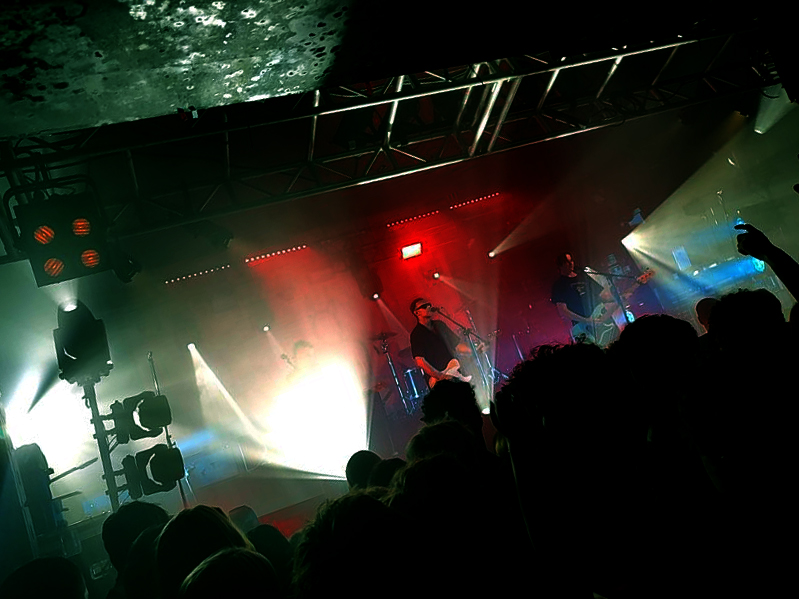
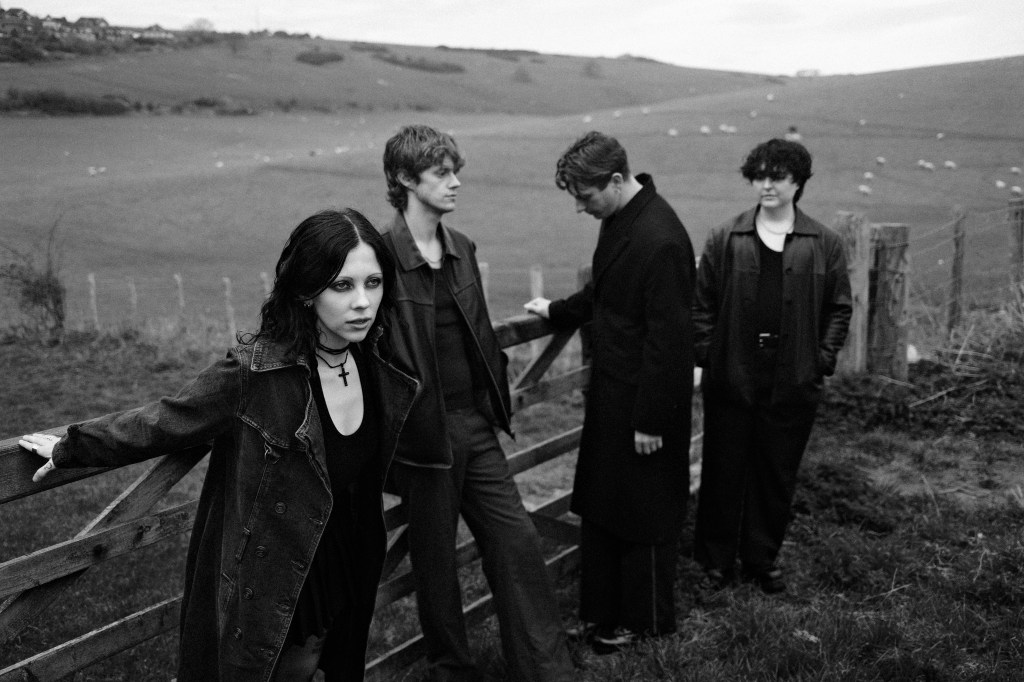
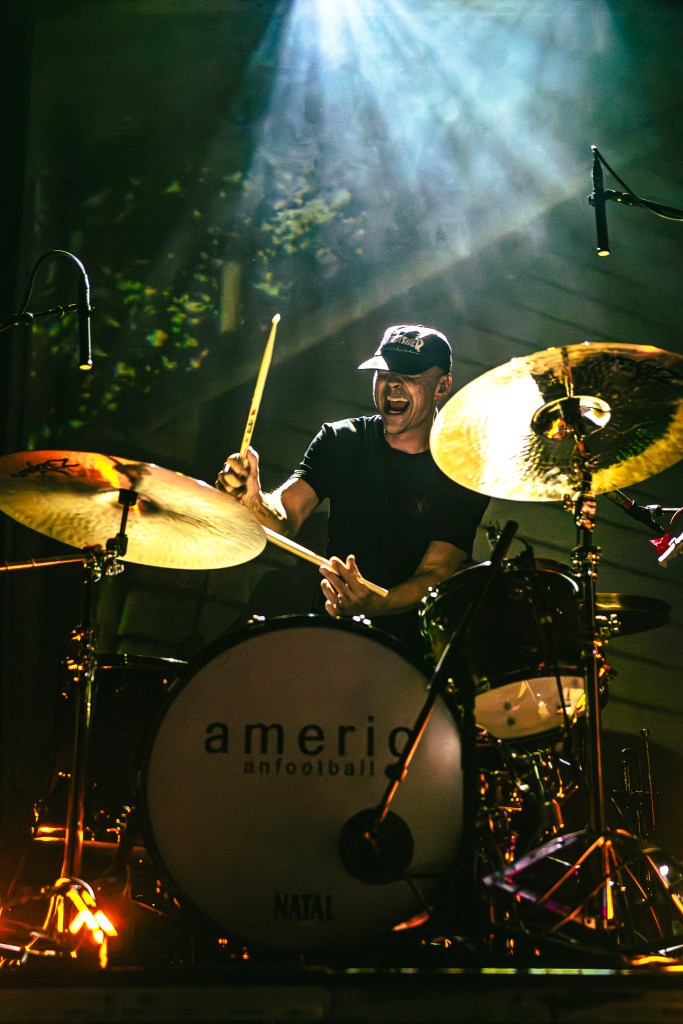
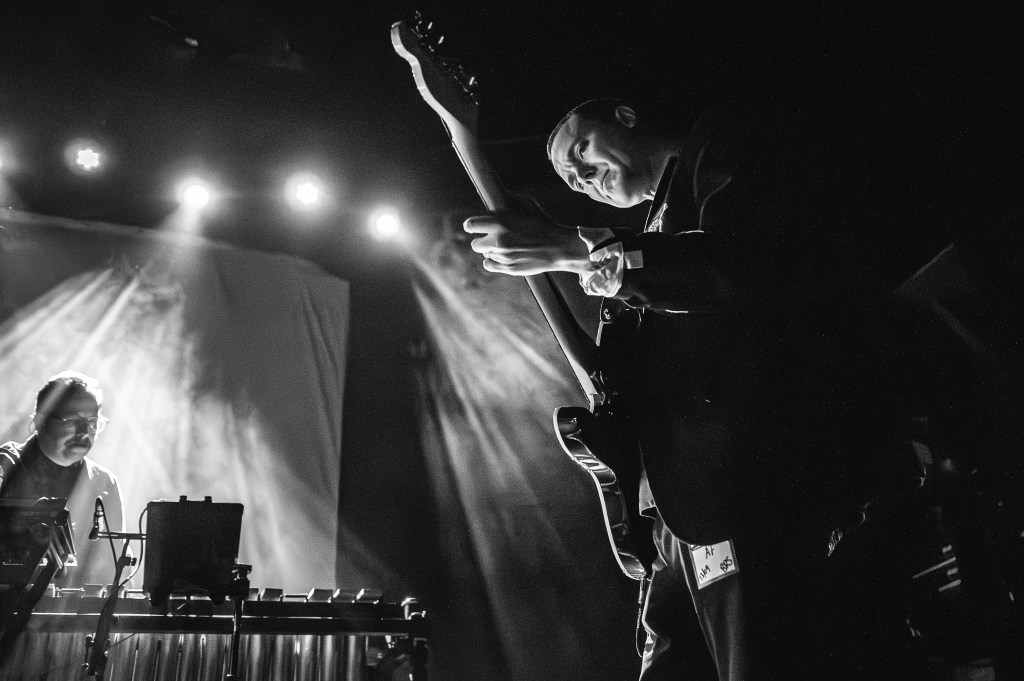
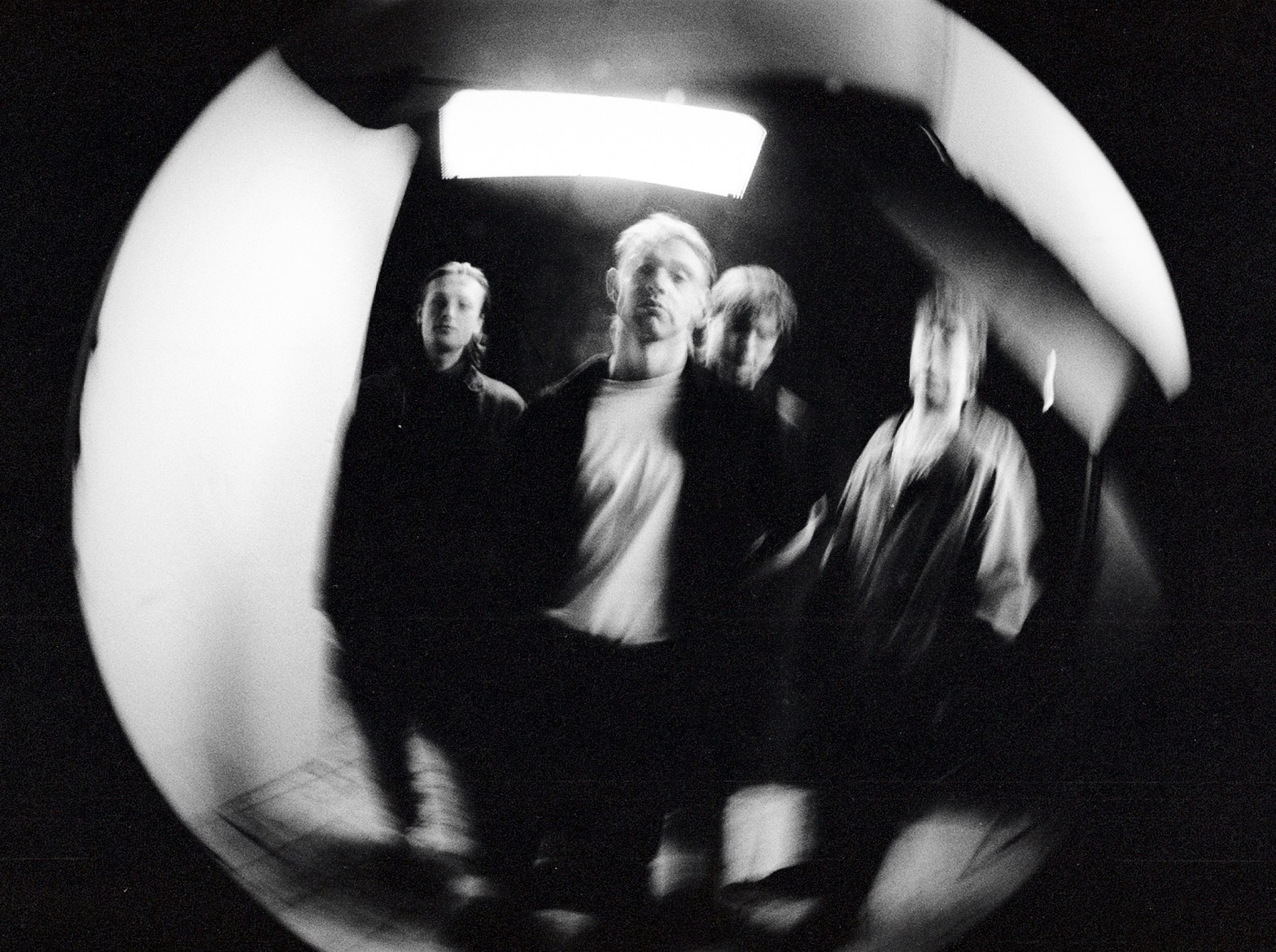
A few months out of the release of their latest album, The Story So Far return to Bristol for a triumphant headline show celebrating the release of I Want To Disappear. Here, they’re headlining the O2 Academy for the first time in their career after playing it once before a decade ago supporting New Found Glory. Although the night isn’t sold out, it’s clear that pop-punk fans had come out in droves to see the Californians rip the venue like it’s their second home.
The last time The Story So Far played Bristol was a year ago, headlining SWX, where they opened with the lead single to the latest album, ‘Big Blind’. It left a lot of fans in the room bopping their heads waiting for them to play the classics. This time, opening with ‘Big Blind’ again had the entire room bouncing and screaming along to the lyrics louder than some of the songs they’d released years ago. From here, they lead straight into ‘The Glass’, considered almost a cult classic in the genre. It is a song that sometimes doesn’t get the love it deserves on The Story So Far setlists, but here it makes its presence known. People are climbing on top of each other during the entire song and belting out lyrics seemingly louder than vocalist Parker Cannon himself. This is the theme of the night for the entire hour-long set. In fact, it is hard to hear what is being played on stage due to the rabid crowd screaming along to every lyric of every song.
In the hour that they play, The Story So Far manage to squeeze in a whopping 18 songs into their setlist. With it being a tour to promote the new album, they play pretty much the entire thing, only missing out on ‘Jump the Gun’ and the title track ‘I Want To Disappear’. Due to the number of songs played in such a short amount of time, there was hardly any breathing space for anybody in the venue. The only breaks in the set allow for Cannon to introduce the other members of the band and their touring drummer, joking about the fact that he is single and has been “forever”.
For the last song of the night, to give the crowd some sort of break from the jumping, moshing, and crowd surfing, they play a new song, ‘White Shores’, about Cannon’s late father, takes the crowd into a sort of emotional rollercoaster. The song starts with just guitarist Kevin Geyer and Cannon playing together, with Cannon singing in falsetto. The crowd, seemingly tired, don’t know how to react to such a calm song. Instead, they decide to sit down and truly revel in the calm ending to a hectic night. Halfway through the song however, when the rest of the band kick in, the entire crowd jump and scream along to the lyrics one last time before the band swiftly make their exit.
Despite leaving arguably their biggest songs, ‘Quicksand’ and ‘Empty Space’, out of the set list, the additions of the new songs well and truly made up for their absence in what was a night I’m sure every fan in that room will remember for a very long time.
Naysayers have been saying for years (decades, even) that rock and roll is dead. However, they need not look further than the O2 Academy in Oxford last Friday night to be proven wrong. The venue’s main room is packed to the rafters, and what’s more, the average age is only around 18. The main act tonight is, of course, alternative rock up-and-comers Wunderhorse. The atmosphere is thick with anticipation from the eager crow: from people eagerly singing their songs to wearing their merch to some even sporting a mullet like frontman Jacob Slater’s, there’s a real sense of devotion from the young crowd.
Once the fourpiece do make their entrance, the crowd erupts, with people squeezing up against each other to get a closer look at the band. Donning a dark pair of shades, Slater looks the part of an enigmatic leader of a rock-and-roll cult. Wasting no time, ‘Midas’, the lead single off their eponymous second album, opens the set. ‘Midas’ may have only come out five months ago, but judging by the reception it receives, it is a staple rock song in the making. The next song is ‘Butterflies’ from Cub, Wunderhorse’s debut album and originally a solo project for Slater. Although Cub is far more pristine and polished than its follow-up, the live rendition is much rawer and demanding of the crowd’s reception.
The band bounce off this energy, and soon enough, everyone in the room – including Wunderhorse – is eagerly jumping and moving side to side
‘Girl’ and ‘Cathedrals’ receive an equally exuberant reception, and at this point, the band is in full swing. Harry Fowler’s roaring guitar pairs beautifully with Jamie Staples’ furious drumming, and Pete Woodin’s mechanical bass provides a bed for Slater’s signature growl.
The bluesy ‘Leader of the Pack’ is a definite highlight, as is its follow-up, ‘Arizona’. Both songs are amongst Wunderhorse’s best, and the crowd breaks into a frenzy as soon as they start. The band bounce off this energy, and soon enough, everyone in the room – including Wunderhorse – is eagerly jumping and moving side to side.
The set barely comes in at an hour, and the band play only twelve songs
The epic, near-nine-minute ‘Aeroplane’ provides a rare moment of respite, which follows into ‘Girl Behind the Glass’. Breaking the crowd out of their reverie, Slater then jokingly proclaims, “This is ‘Espresso’ by Sabrina Carpenter”. He dives right into ‘Purple’, decidedly not ‘Espresso’ by Sabrina Carpenter, but instead one of the songs that initially earned Wunderhorse their spot at the forefront of the contemporary rock landscape. Although throughout most of the show Slater, like the rest of the band, maintain their cool, collected image, Slater allows himself to simply appreciate the crowd and take in the moment as all 1150 people sing back the earworm of a chorus.
Absent from the set is ‘Superman’, a devastating song about unfulfilled potential. Although the band have not been playing it on every show this tour, its disappearance does not go unnoticed, making the ending to the main set a tad anticlimactic.
The encore also feels slightly disappointing. Although ‘July’ is supposed to close the show, a packed touring schedule leaves Slater’s voice worn out and unable to perform the unhinged wails and cries the song calls for. This leaves ‘Teal’ as the last song on the set. And although they don’t play ‘July’, ‘Teal’ still makes the crowd’s energy climax in unanimous chants as people sing along to its exhilarating verses. There is a collective groan as Wunderhorse leave without having performed ‘July’, but murmurs of appreciation can be heard as the sweaty and buzzing crowd spills out onto the street.
Wunderhorse’s show at the O2 Academy in Oxford is an interesting one. On one hand, there is the electric excitement of a genuine rock-and-roll band receiving their well-deserved laurels from the next generation of rock lovers, but on the other, it feels incomplete. The set barely comes in at an hour, and the band play only twelve songs. Although they cannot be blamed for not playing ‘Superman’ and ‘July’ – whatever the reasons may be – Wunderhorse have two albums, and Slater has a full-length solo project (Pinky, I Love You), so their time on stage feels woefully underused. The show’s short duration aside, Wunderhorse are still at the forefront of an exciting wave of new rock artists, and they’re definitely one to watch in the coming years.
Last night (2nd October) I picked up a last-minute review spot for a gig at Exchange Bristol, as friend and fellow TSM writer Jace was under the weather. And I was certainly lucky to catch an evening of music which I will not forget for a long time.
Sløtface (previously and still pronounced Slutface) are a Norwegian rock band, fronted by vocalist and songwriter Haley Shea. I’d heard of Sløtface by name but little more before last night’s gig, and my pre-listening mostly consisted of the bus ride to Bristol’s legendary venue.
Before I go to the main part of the review, I first wanted to just say how amazing Exchange is as a music venue. It has been a frequent venue for gigs for me over the last 5 years, and I will continue to go to gigs there for as long as I live. The staff are amazing, there is a good selection of local drinks and they are really supportive of smaller artists by making live music accessible for everyone.
The night was opened by the local band SunSpot. I’ve seen these guys a couple of times before, and they never fail to put on a good set. It was a mixture of old and new songs, including tracks off their upcoming album. ‘Microscope’ made its debut, and although only three of the five from the full band were there, it was still an energy-building opener to the night.
Immediately the energy was high, people were enjoying themselves and getting their groove on.
After a very quick changeover, it was onto SUDS. For those of you who don’t know SUDS, what are you doing? I first discovered these amazing musicians when they supported Spanish Love Songs at The Fleece earlier this year, and I have been a dedicated fan since. Their mix of indie rock, combined with the emotions and output that a good band needs makes them work so well. Their debut album, The Great Overgrowth, came out last year, and they are destined for even bigger stages.
Another quick change and it was onto the main band of the night. Although not quite sold out, the main room of Exchange was feeling pretty good, with the atmosphere almost electric and people buzzing to see Sløtface. Promoting their new album, Film Buff, they opened straight into the lead track, ‘I Used To Be A Real Piece Of Shit’, a song about changing and getting to know yourself. Immediately the energy was high, people were enjoying themselves and getting their groove on.
They kept up the pace throughout, with the guitarist coming into the crowd during ‘S.U.C.C.E.S.S.’, and it wasn’t long before Haley was also in the crowd, getting the mosh pit started. To begin with, any cis-males had to sit this one out, but soon after everyone was allowed in, provided they kept it a safe space (and they did!).
The crowd were so receptive and amazing, that we were treated to ‘Slumber’, a lesser-played but one of the band’s most popular songs
As the mammoth 19-song set continued, we were treated to some of the bands older songs, before coming back to ‘Lift Heavy’, and being told it was a mandatory dance song! The mood however quickly changed, with ‘Impression Of A Car Crash’, being told to keep quiet, before going back to one more party song, ‘HAPPY’.
For most of the shows, that would have been the last of the set. But Bristol wasn’t like most shows, and the crowd were so receptive and amazing that we were treated to ‘Slumber’, a lesser-played but one of the band’s most popular songs. The absolute vocal soup that is the ending to this song is so confusing, but works so well that it had me singing it all the way home. Sløtface is certainly one of my new favourite bands and I cannot wait to one day see them live again!
Until then, all that is left to say is thank you to all the hardworking people behind the scenes that make these shows happen!
“This is the one. The big one,” proclaims Henry Cox, vocalist for Boston Manor. Tonight marks the band’s biggest headline show to date, as they play London’s 2000-capacity O2 Forum Kentish Town. Since their debut EP back in 2014, the Blackpool-born-and-bred band has steadily risen to success. Still, they had always remained in the semi-obscurity, playing venues’ second rooms and sitting comfortably a few rows down on festival lineups. But tonight’s show proves that not only are Boston Manor destined for greatness, but that they are already well on their way there.
Within the first thirty seconds of the show, it’s obvious that playing in bigger venues suits them. The stage swims in thick fog, drenched in blinding hues of green, blue, red, and white. Almost cinematically, the band stride on stage and break into ‘Datura (Dawn)’, the atmospheric, dream-like opener to their latest album, Sundiver. It’s certainly a grand entrance. The theatricality works wonderfully, and from the first moments, the audience is rapt.
They may have only released their debut album in 2016, but their command of the stage and audience demonstrate the band have experience beyond their years.
The following two songs, ‘Container’ and ‘Floodlights on the Square’, are a thrilling barrage of noise. Thunderous guitars, brutal drums, and rumbling basslines pair beautifully with Cox’s driven cries. When played live, these tracks also have a newfound grit and sense of urgency. Boston Manor’s entrance may have leant towards the theatrical, but they haven’t lost the raw edge and DIY amongst blinding lights and higher budgets.
Their performance is so tight, in fact, that it comes as a bit of a shock when Cox introduces ‘England’s Dreaming’, a track from their 2018 record, Welcome to the Neighbourhood as “one for the oldies”. Their stage presence is that of a band with many more years of experience, so this comment highlights just how relatively new Boston Manor still is. They may have only released their debut album in 2016, but their command of the stage and audience demonstrate the band have experience beyond their years.
‘Sliding Doors’ and ‘Horses in a Dream’ allow Boston Manor to further showcase their talents. With staunch conviction, Cox strides the length of the stage and gestures in time to the music, often acting out lyrics. To either side of him, guitarists Ash Wilson and Mike Cunniff and bassist Dan Cunniff move with equal purpose, all while drummer Jordan Pugh rules the back of the stage with feverish power. Their energy is contagious. It feels like they’re trying to conquer the stage and make it their own, all while leaving no shadow of a doubt that they have earned their rightful place on it.
When the band are performing, their sheer authority over the stage demands the audience’s attention. However, in the moments when Cox is interacting with the crowd, he comes across as charmingly bashful. Perhaps it’s the nerves or perhaps it’s awe at the sheer scale of the show, but either way, the result is endearing. It elicits effusive cheers from the crowd in solidarity.
It might be the end of the show, but it also decidedly feels like the warmup for a new era for Boston Manor.
‘Liquid’ is a notable highlight, as Trophy Eyes’ John Floreani comes on and performs alongside Boston Manor. Floriani and Cox bounce off each other, resulting in a moment of sheer thrill and excitement from the pair. With Floreani featuring on the studio recording, seeing them perform ‘Liquid’ together feels like a full-circle moment.
In contrast to ‘Liquid’s unbridled energy, ‘Inertia’ and ‘Bad Machine’, two of the band’s relatively slower songs, demonstrate that they can do reflective ballads just as well as their usual full-pelt post-hardcore.
Finally, ‘Dissolve’, ‘Halo’, and ‘Crocus’ bring the show to a breathless, dizzying climax just before Cox effusively declares his dislike for encores. Wasting no time, they launch into the final two songs, ‘Passenger’ and ‘Foxglove’. The last twenty minutes of the concert are pure euphoria. The audience is completely and utterly engrossed in the performance, and the band feed off this energy, with each cheer and singalong propelling them to new heights. Perhaps without realising it, Boston Manor have just given a masterclass in how to put on a rock show.
Leaving the venue, there’s a sense of accomplishment in the air, as the audience – and perhaps the band, too – begin to realise the magnitude of what they have just witnessed. It might be the end of the show, but it also decidedly feels like the warmup for a new era for Boston Manor. With grit and grime, killer melodies, and softer moments to balance it all out, there is plenty of appeal in their material. And for naysayers who claim guitar music died in the 90s? It only takes going to one Boston Manor show to prove that rock and roll is not just alive but thriving – and Boston Manor is leading the charge.
Image and words: Sophie Flint Vázquez, no use without permission
If Pale Waves’ last album Unwanted (2022) was a collection of dark, vindictive pop-punk bangers, 2024’s Smitten sees the band completely flip the script in favour of a collection of twelve sparkly, glittery tracks that lean closer to The Cranberries than The Cure.
The comparison between Pale Waves and The Cranberries goes beyond the bands’ sounds. For example, on the lead single ‘Perfume’, Pale Waves vocalist Heather Baron-Gracie takes cues from the late Cranberries singer Dolores O’Riordan in her swooping, lilting vocal delivery. “My mother says when I love something, I never let it go”. Cranberries comparisons aside, ‘Perfume’ is an excellent track and a shining showcase of the band’s growth. Its lyrics are deliciously dark and dripping with obsession and desire, and they contrast beautifully with Pale Waves’ new lush pop sound – not to mention ‘Perfume’ is an undeniable earworm.
Smitten feels inspired by Pale Waves
Another standout track is ‘Seeing Stars’, one of the heavier tracks on the album. Its big, anthemic choruses and twinkly touches are a surefire sign the band is aiming for arena-sized greatness. Beyond these tracks (and a handful of others, including the deceptively cheerful ‘Glasgow’ and lovesick ‘Gravity’), however, the rest of the album falls short of the same spark.
Similarly, while the band dips their toe into this new sound, they fail to commit fully. With more experimentation and risk-taking, Smitten could have signified an exciting new chapter for the band. Instead, it sometimes feels too similar to what has come before. In fact, if Pale Waves’ earlier material is inspired by The Cure and The Cranberries, Smitten feels inspired by Pale Waves. For example, ‘Miss America’ and ‘Hate To Hurt You’ are cookie-cutter Pale Waves songs without the strong melodies of tracks from, say, 2018’s My Mind Makes Noises or the punchiness of Who Am I? (2021).
Smitten has a lot going for it – its production is stellar, Baron Gracie’s vocals are at their best, and their new, polished sound fits them like a glove.
This aside, the years of experience the band now have do not go unnoticed – Baron Gracie’s vocals are stronger than ever, with her soaring voice in the chorus to ‘Last Train Home’ making for one of the strongest moments in Pale Waves’ repertoire. On the same note, her matured vocals add new weight to their lyrics, even though they can still verge on overly sentimental on occasion: “She’s pulling me in, like gravity, everywhere she goes” (‘Gravity’) and “Just come on and kiss me, again” (‘Kiss Me Again’). But if you let yourself get swept up in the syrupy goodness, you’ll realise that Pale Waves are actually quite fun.
However, where Smitten truly shines is in its production. With jangly pop hooks, twinkling synths, and dashes of string arrangements, the album is meticulously crafted, and the layering of instruments is unequivocally brilliant. ‘Seeing Stars’ is one example: the guitar solo is rich and the string arrangement that weaves in and out of the main composition makes you wonder why Pale Waves hasn’t experimented more with different sounds and instruments before. Unfortunately, the album’s production isn’t quite enough to bolster the occasionally lacklustre melodies.
Smitten has a lot going for it – its production is stellar, Baron Gracie’s vocals are at their best, and their new, polished sound fits them like a glove. But if Pale Waves want to achieve the high expectations they are setting for themselves, they’ll need to continue pushing themselves and explore new directions, whatever these may be.
It was the first true moody, angsty, cold day of the year, setting the scene perfectly for a good, nostalgic Midwest emo show. I was shivering in my band hoodie and beanie on my way to SWX to see the legendary friends from Illinois who released a genre-defining debut LP in 1999. While American Football (LP1) was created as a casual, half-assed’ side project’, it would soon receive cult classic status and be considered one of the most important albums of its time and one that was highly prominent in the development of Midwest emo as a sub-genre.
Twenty-five years later – just one night before the official anniversary of its release – the reformed band performed the self-titled debut LP in full. Upon entering SWX, the sold-out room was packed from the barrier to the door. By the time I managed to get to the front, I could sense the excitement for what we were all about to experience in the air. The lights went dark, the first sounds of ‘Five Silent Miles’ hit the speakers and the iconic American Football house in Urbana, Illinois, was projected onto the wall behind the stage. ‘The Summer Ends’ marks the start of the journey through LP1 played in its entirety. Having attended dozens of album anniversary shows in my lifetime, this one felt different to all the others.
It was not just a celebration of the record but a celebration of an entire genre, movement, and sub-culture. The celebration of growing up in a changing world that you don’t always understand and that doesn’t always understand you. The celebration and soundtrack of moving through the years, the experiences and the emotions like any emo teen. The celebration for feeling the feelings even when you can’t find the words to express them. The cold winter nights, sparkling summers, and every good and bad day. The instrumental twinkly guitars and soft trumpets form the perfect soundtrack to see memories of a lifetime of emotions and experiences flashing in your mind, like telling stories around the campfire with a cup of tea and a warm hug. And that hug is oh so welcome on this true autumnal Friday night.
For an album that is still so highly acclaimed and culturally relevant a quarter century later, the atmosphere in the room was a flavour of its own and one that I haven’t often tasted myself. The swirl of melancholy, nostalgia and peace meant you could hear a pin drop in the room. But don’t be fooled; this silence is not a sign of disinterest or a bored audience, but rather the hypnotising craft of the performance witnessed. Everyone in attendance was so in awe that the sound of the shutter of my camera snapped me back into the present.
At times, standing in the audience flooded me with the nostalgia and peace I felt listening to these songs in a friend’s shed as a teen secretly smoking and drinking in silence, the aesthetics of exploring, the moodiness of the changing seasons, the hotboxing of cars and driving around for the late night adventures that felt so deeply defining for many emo teens. For a moment, I completely forgot that the band was right there on the stage and that all these people were in the room enjoying the same emotions of nostalgia towards their teenage years and the sounds coming from the stage.
On occasion, a member in the audience would speak up during an especially quiet moment for the whole room to hear, interacting with the band, adding to one of the most intimate atmospheres I have ever seen at a show, where regardless if you were at the barricade or all the way in the back, it represented the true DIY emo basement gigs with a dozen people there – a feeling that is so rare to experience at a show with a few thousand folks in the audience.
Frontman Mike Kinsella admits to the audience that he does not often speak to large crowds, and his life usually consists of daily life errands, kids, groceries, housework, and even funerals of grandparents just like the rest of us – and apologised to the band for repeatedly bringing up his grandpa’s funeral. Is it really a Midwest emo show without some unprocessed emotions about loss, though?
The band jokingly states they will be playing ‘Wonderwall’ next as I am on my way down the stairs from the balcony, and I realise I hear the first riff of ‘Never Meant’ echo through the building and pick up my pace to make my way back to the pit to be fully immersed in the live experience of one of the best album opening tracks of all time. For the first time, the audience is not totally quiet, and the soft, respectful sound of excitement rises in the crowd as people start singing and humming along. The audience naturally splits into singing the instrumental riff of the final verse whilst the other half screams the lyrics, overlapping and intertwining each other like a perfectly rehearsed harmony, and I start to feel chills all over my body.
This album attained cult status for a reason, but this performance showed me that it created a community of people from all backgrounds who feel similar things and who are just looking for a deeper connection than we usually find in this world. And this show did exactly that; it made me feel more spiritually connected to a thousand strangers than I did most of my childhood in a world where I felt like I was the stranger. This sold-out show proves that maybe we aren’t so strange at all.
With four top 5 UK albums and countless sold-out headline shows under their belts, Stockport-born Blossoms are no strangers to the indie-rock scene. Whilst every Blossoms album has a distinctive sound, they have perhaps previously played it safe with fairly conventional, primarily guitar-based melodies; what is striking about Gary is Blossoms’ new, funky, synth-driven style.
The three singles, ‘What Can I Say After I’m Sorry’, ‘Gary’, and ‘Perfect Me,’ were the first hints that Blossoms would take on a more groovy approach in Gary. ‘What Can I Say After I’m Sorry’ is an upbeat number featuring a spritely synth beat. Its funky, 80s vibe is effortlessly cool, and the track closes with some stellar guitar playing from guitarist Josh Dewhurst. Despite its youthful feel, it is clear that Blossoms feel self-assured and confident in their abilities to release this admittedly genre-bending track as the album’s first single. ‘
‘Perfect Me’ is an energetic earworm and pairs a radiant synthesiser with a head-bopping melody, whilst the titular single ‘Gary’ features a joyous, infuriatingly catchy riff and chirpy vocals. Singer Tom Ogden recounts the story of an 8-foot tall fibreglass gorilla called Gary, which was stolen from a garden centre in Lanarkshire, Scotland, last year, breathing life into this largely unknown tale. ‘Gary’ is a song that doesn’t take itself too seriously, and it’s refreshing to feel that Blossoms are having fun creating these tunes.
While the 80s influence on Blossoms’ music has always been notable, these tracks take it to the next level
‘I Like Your Look’ is the most unusual track on Gary. It begins with a catchy drumbeat and laser-like synthesiser effects, and Ogden speaks rather than sings in the verses. This anthemic quality gives it an edge, and it’s not difficult to imagine ‘I Like Your Look’ being played at an old-school disco or club night. A persistent synthesiser, a groovy guitar solo, and the disco nod in the lyrics’ I think your flares are so cute, I like your look’ reinforce this disco vibe.
‘Nightclub’, ‘Mothers’, and ‘Slow Down’ play further into this retro, synth-fuelled fantasy. ‘Nightclub’ is a breezy, playful number with punchy keys, while ‘Slow Down’ is a smooth, chilled-out track permeated by a deep, twangy guitar riff. ‘Mothers’ takes on a softer tone, with Ogden’s silken voice again accompanied by a vibrant synthesiser.
The opening track, ‘Big Star,’ is notably heavier, building from a catchy, rocky guitar riff into a haunting, 80s-style psychedelic guitar solo, but it still retains Gary’s signature vintage feel. While the 80s influence on Blossoms’ music has always been notable, these tracks take it to the next level, embracing 80s synth-pop in all its glory.
Contrastingly, ‘Cinnamon’ is a stripped-back, sickly sweet burst of energy. Accompanied by an upbeat acoustic guitar, Ogden describes the euphoria of a new relationship: “You’ve had my mind running wild / every day for a while”. Cinnamon is a love song in its purest form, and its simplicity offers a refreshing contrast to the heavily layered, synth-driven songs of the rest of the album. Its euphoric, joyful acoustic guitar is reminiscent of ‘Ode to NYC’ from Ribbon Around The Bomb, but with the confident air of a band who, despite having mastered their sound, aren’t afraid to go back to basics.
It showcases Blossoms at their most authentic and creative
My only grievance with Gary is that it’s over too quickly. In typical Blossoms style, each track is relatively short and punchy, ensuring that no song drags out unnecessarily. But with only ten tracks, Gary almost finishes too soon. This is emphasised by the abrupt end of the closing track ‘Why Do I Give You The Worst Of Me’, an intense, frantic song complete with pulsing violins. Desperation claws through Ogden’s voice as he builds to the chorus, promising the potential of a cathartic, intense climax to finish the album. Despite this dramatic build-up, the song has a rather abrupt ending. I just wish there was more to listen to.
Beyond this, Gary is a triumph. It showcases Blossoms at their most authentic and creative, and the excitement with which they approached this album is palpable in every song. Most notable throughout the album is the bright, upbeat synthesiser, played by Myles Kellock, which features in pretty much every track. It gives a cohesive, vintage feel to the whole album, and it is apparent that each song was written purposely with this distinctive style in mind.
Plastered across Blossoms’ social media platforms is the message “Who would call their album Gary?” which feels apt considering the unusualness of this album compared to the guitar-heavy styles of other current indie bands. Having left Virgin EMI last year to set up its own record label, Blossoms are not afraid to break away from the conventional mould, and it really works.
Gary is a standout album. While hints of the classic Blossoms sound remain, this new, quirky direction showcases Blossoms at their best.
Oxen symbolise power, strength, and boldness, which are also qualities that define Hello Mary’s second album, Emita Ox. After the alt-rock trio’s self-titled debut was released to critical acclaim, they wasted no time and turned things up a notch. The result? An experimental, daring album and a strident step forward for the band.
There are some true moments of brilliance on Emita Ox. The three-track run consisting of ‘Three’, ‘Down My Life’, and ‘Knowing You’ encapsulates everything that makes Hello Mary shine. ‘Three’ kicks off as a fuzzy shoegaze number which combines Midwestern-emo guitars with an increasingly chaotic blend of thrashy guitars and crazed piano. The transition into ‘Down My Life’ sees the band switch in a completely different direction, with choir-like vocals and scuzzy guitars making for a track that is as ominous as it is intriguing. This shift is executed seamlessly. The final flourish in this brilliant three-song run is ‘Knowing You’, a track that beautifully blends grungey electric guitars with acoustic guitars to create an Americana-themed track that, in theory, should feel completely out of place. However, lead vocalist Helena Straight’s siren-like cries and distorted guitar tie everything together and justify the song’s spot on the album.
The album’s instrumentals are consistently strong. The quickening guitar that opens ‘Float’ makes for an alluring start to the record, while the plucky, Elliott Smith-esque guitars on ‘Everything We Do’ end the album on a glistening high note. Similarly, although a tad incongruent in its transition between the roaring intro and shimmering verses, ‘0%’ boasts impressively tight instrumental arrangements. The gritty guitars echo 90s grunge and Nirvana and give the album a sense of cohesion despite its many shifts.
However, the band occasionally lose themselves in this experimentation. The interludes ‘Heavy Sleeper’ and ‘Hiyeahi’ add little and slow down the pacing. The songs that follow – ‘Footstep Misstep’ and ‘Bubble’, respectively – lack the weight to bring the album back to its earlier momentum. While the album’s latter half doesn’t quite reach the highs of the first half, ‘Everything We Do’ concludes the album on a definite high note, and the folky, jangly riffs on the track once again prove the band’s commendable versatility.
While not a perfect album, Emita Ox is an impressive step forward for Hello Mary. With the oxen-like boldness and strength the band demonstrate with their experimentation, a genuinely groundbreaking album feels within reach.
For some, Wunderhorse is a household name. For others, the response will be, “Who?”. As of right now, bubbling just beneath the surface of the mainstream contemporary rock scene, a band called Wunderhorse has been slowly rising, waiting for the moment to break through into their well-deserved mainstream fame. And after the release of their second record, Midas, this universal recognition may not be too far away.
Born after the explosive, flash-in-the-pan punk band Dead Pretties decided to call it a day back in 2017, lead singer and guitarist Jacob Slater took some time off before eventually re-emerging under the name Wunderhorse in 2021 and releasing his debut album, Cub, in 2022, which was received with critical acclaim. Combining infectious melodies, groovy hooks, and a dash of leftover grit from his time with Dead Pretties, Cub was an exciting – if a tad overly safe – new beginning for Slater, putting his reckless punk days to rest in favour of making radio-friendly rock for the masses. Slater was then joined by guitarist Harry Fowler, bassist Peter Woodin, and drummer Jamie Staples, who began as touring musicians for Slater but eventually became part of the band.
“We spent a lot of time together, and I think it just naturally started,” Jamie Staples says, reflecting on his time touring with Wunderhorse before their current formation. “As soon as [Cub] came out, we were able to start touring it. We kind of reimagined a lot of those songs for a live setting.” Even the band’s glossier songs, such as ‘Leader of the Pack’ and ‘Purple’, suddenly had a newfound edge.
“I mean, as of now, we’re able to keep up that energy. I don’t think any of us think about, you know, what moves we’re going to pull on stage or any of that business”
Jamie Staples, Wunderhorse
This heavier sound didn’t fully take flight until album two, though. Moving away from the standard pattern of a band’s second album being poppier than the first, Midas marked a new beginning as they traded slick riffs and polished vocals for full-on, grungy rawness and distortion.
As the band shifted their sound towards this rawer sound, they also began building a reputation for themselves through their riotous live shows, earning themselves coveted support slots for the likes of Pixies, Declan McKenna, and current band-of-the-hour Fontaines D.C. Whether it was Slater grabbing his throat during performances of ‘July’, wrapping the microphone wire around his throat, or his rasping growls in between verses, there was a growing sense that Wunderhorse were not only capable of writing a first-rate tune but were also capable of putting on an exemplary show while also remaining authentic to who they were as musicians.
Image: Polocho 2024
“Honestly, I would say all of this is real. And you may catch us on a day when it’s not as visceral,” Staples says, reflecting on Wunderhorse’s run of shows opening for Declan McKenna. “I mean, as of now, we’re able to keep up that energy. I don’t think any of us think about, you know, what moves we’re going to pull on stage or any of that business,” Staples tells me with a chuckle. “I think that’s the opposite of what we’re trying to do.”
“We try and get ourselves in a headspace to be able to do that before a show, yeah, in order to go out and do something real. And maybe in that sense, you could say it’s contrived because we have to get into a bit of a zone for it,” he explains. “We just try our best to keep the energy up in our shows; it’s what we like doing.”
“One of the overarching themes of the album would be the human intervention of something quite natural and the destruction of it”
This sense of wanting to do something ‘real’ doesn’t just influence their live shows but also permeates their music. When making Midas, the band aimed to make an album that sounded “imperfect, very live, very raw; no frills… like your face is pressed up against the amplifiers, like you’ve been locked inside the bass drum.” Paired with lyrics describing an array of unsatisfying lives (‘Midas’, ‘Emily’, ‘Rain’, etc.), Midas paints the picture of people suffering from the effects of late-stage capitalism and the loss of the natural world.
“It’s hard to say this in a way that doesn’t sound too ‘art school’ or whatever, but one of the overarching themes of the album would be the human intervention of something quite natural and the destruction of it,” Staples ponders, choosing his words carefully. “I think people in their own worlds find any way they can to find stuff that is real and right,” he goes on to add: “Technologies are, like, this big factory sucking you out of the real world.”
This idea inspired the themes in Midas and shaped the album’s creation. The band headed to Minnesota to record in Pachyderm Studios, the same studio where Nirvana recorded In Utero in 1993.
Image: Polocho 2024
“The way we approached this album was to more or less put our phones away for a month and to make this record fully absorbed in something. And I can definitely say, retrospectively, there was a lot to that because at any given moment, any given day, you might be creating something, or whatever you’re doing, and your phone is going to ping and take you right out of that. And you never know what you might have been onto if you’d just allowed yourself to, well, get bored almost and allow your imagination to do its thing.”
“With what we were doing, it wasn’t too difficult for us. None of us are particularly that wedded to our phones. I think we were very focussed on what we were doing. We were very appreciative of the time we’d been allotted in that great studio, so we just wanted to make the most of it.”
“I think it’s a song about someone that could have been… but just didn’t have whatever it was inside themselves to make it happen”
Jamie Staples
In a sense, the dispairing pictures Midas paints also beg the follow-up question: Is there an antidote to this reliance on technology, dissatisfaction with modern life, and feeling of disillusion that the band points out? “I don’t know if I’m qualified to answer this,” Staples chuckles. “I would hope so!”
But perhaps the first step to ‘solving’ this dissatisfaction is acknowledging it. On ‘Superman,’ the sixth song on Midas, the band tells the devastating tale of someone putting their passions aside in favour of a cushy office job but being unable to shake the feeling they have picked the wrong path.
“We’re going to do everything we can to push this record”
jamie staples
“It’s supposed to be a song everyone relates to,” Staples explains, a forlorn twinge in his voice. “I think it’s a song about someone that could have been… but just didn’t have whatever it was inside themselves to make it happen. Their dreams kind of fell by the wayside, but they still feel like they’ve got this superhero inside of them that no one is ever going to be able to see.”
Unfortunately, not everyone is lucky enough to make a living off of their passion. In fact, despite their laurels and rising star status, Wunderhorse still has to rely on part-time jobs to make ends meet. So perhaps the temporary solution to this is to have some sort of outlet to let that pent-up disappointment go, whether writing songs about it, going to a gig for collective catharsis, or something else entirely.
“The only thing I can tell you with any assurance is our tour in October, and we’re going to support Fontaines [D.C.] in Europe in November, and we know for sure we’re getting put to work next year in quite a big way. We’re going to do everything we can to push this record,” Staples says. “Alongside that, we’re starting to write the next thing,” ending the interview on a cryptic note and with a smile.
As they gear up for a packed touring schedule, Wunderhorse’s moment in the spotlight is finally within reach. With their growing reputation, commanding live performances, and outstanding second album, they’ve proven they’re more than ready for the success that awaits.
In 2022, Wunderhorse, then the solo project for frontman Jacob Slater, released their debut album, Cub. Filled to the brim with catchy, energetic rock, Cub put Slater into a very comfortable spot in the current rock landscape, earning him support slots for the likes of Fontaines DC and Declan McKenna. Paired with a burgeoning fanbase, all eyes were now on Slater—now joined by a full band—for album two, wondering if this was the project that would propel them into the mainstream or keep them in the semi-underground. Not only does Midas meet any expectations Cub sets, but it surpasses them completely.
Departing from Cub’s polished slickness, Wunderhorse breaks the mould of a band’s second album being poppier than their debut, instead swinging in the opposite direction. The result is an album that feels raw, unrefined, and more like a true debut than Cub. While the indie-rock riffs of ‘Arizona’ would not feel out of place on Cub, the industrial grind of guitars on ‘July’ or the full pelt chorus of ‘Rain’ prove the band have their sights set in the opposite direction of the sound that put them on the map.
The subdued ‘Arizona’ provides a tentative moment of rest
Wunderhorse’s newfound grittier sound also brings to light Slater’s bleak lyricism, fuelling the sense of impending doom that penetrates the record. The album presents a range of grim scenarios, from the callous businessman that puts profits above human lives in ‘Midas’ to the dreary dead-end job in ‘Emily’ (“deadlines, no sleep, this job is killing me slowly”) to the regretful reflections in ‘Superman’, which portrays a regretful picture of a wasted life. Midas is a patchwork of images of a society hurtling towards dystopia. Scuzzy guitars and Slater’s raspy vocals also give the album a mechanical feel, dragging the listener straight into the heart of the industrial machines and capitalist societies to blame for this hellscape.
‘Aeroplane’ is a hopeful sign of what will come from Wunderhorse in the future
Despite this, there are still moments of respite throughout the record. The subdued ‘Arizona’ provides a tentative moment of rest, with hazy guitars washing the track with bittersweet nostalgia for a bygone time and place. Similarly, the indie-rock-tinted ‘Girl’ beckons singalongs in its verses and choruses. And while ‘Superman’ is a grievous tale of the consequences of not following your passions, a more hopeful eye could interpret it as a cautionary tale, with its soaring guitar-led outro and grandiose cries of “Superman” scattered throughout the song serving as a call-to-arms to all the forgotten dreamers and artists of the world.
The album closes with ‘Aeroplane’, an epic near-nine-minute track blending echoes of country with Radiohead-esque production. Its cinematic, soaring choruses, stunning dream-like riffs and grandiose belts allow some of the pressure built during the rest of Midas to be released. However, like the rest of the album, its charm also comes from its rawness and imperfections, whether the distorted electric guitars in its instrumentals or the cracks in Slater’s voice. Succeeding in all its ambitions, ‘Aeroplane’ is a hopeful sign of what will come from Wunderhorse in the future.
Midas strives to both dissect contemporary society and offer an antidote to it. While its lyrics vividly portray the ills of modern life, its sound revives the essence of classic guitar music. In an era where some claim guitar music is dead, the rise of Wunderhorse is a powerful testament to its enduring relevance and a hopeful sign for its future.