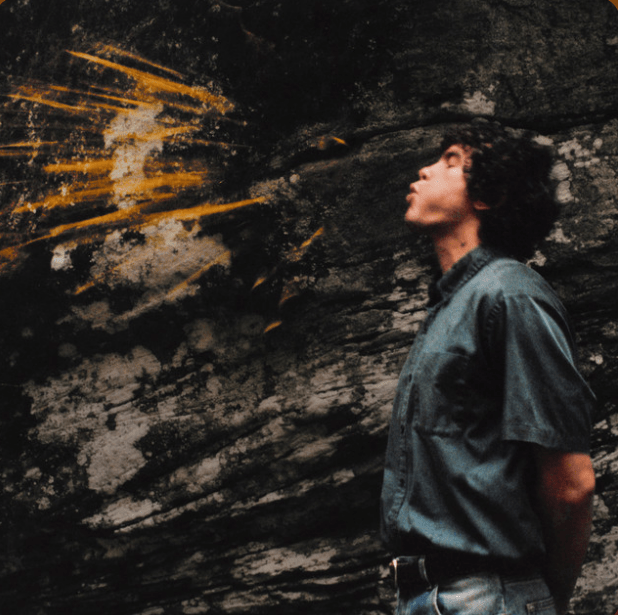
Dominic Fike’s Rocket: a playful, fiery mixtape that takes off with easy direction

Rating: 4 out of 5.

Recently, Dominic Fike has been doing what he does best. From kicking back a raw and laid-back set at Lollapalooza Chicago to teasing live renditions of yet-to-be-released music, Fike is always playing to the crowd. He’s introduced the world to Rocket (both the name of his son and most recent mixtape), and this project is full of fire – not the kind that burns, but the kind that moves with ease. We’ve enjoyed this with his previous record, Sunburn, already. And while that previous project certainly left a mark, Rocket is just so easy to listen to. Sure, it may be short-lived and gains minimal points for innovation, but it’s rhythmic, care-free and honest.

Fike dances his verses around a repeated bassline: honest, stripped back

There’s a joke that’s taken off among Fike’s fanbase: is it possible for him to make a song that doesn’t sound infinitely better when performed live, or a song that’s longer than 3 minutes? ‘All Hands on Deck’ falls victim to this curse straight away, but it’s a great introduction to this mixtape. Fike dances his verses around a repeated bassline: honest, stripped back, and he even closed his Lollapalooza set in the same way. And while it’s uncertain if the random “hawk tuah” reference lands the way he intended it to ­– a tongue-in-cheek pop culture reference turned cringe – this opener closes with some pretty, zoned-out strings that do make up for it.

‘Aftermath’ is another playful track with some cute ad-libs and catchy vocal stims: “when everyone in the world walks just like this, man you have to laugh / ha ha ha” that starts off rather introspectively before descending into that faraway, fried instrumental (and vocal effect) that Fike really seems to be pushing for. It’s simple but does the trick. ‘Smile’ is less fun though, and doesn’t follow suit. There’s a punchy guitar riff in the background, but even that doesn’t feel particularly innovative or exciting. That, and the track as a whole, sounds like it would’ve been done before, perhaps in his first album.

Fike would certainly benefit from adding some more substance to these tracks […] there are moments on this mixtape that had the scope for expansion

What does follow, however, is a list of highlights. ‘Sandman’ is a faster-paced, genre-blending track that really accentuates what Fike does best. He’s dynamic here, echoing the smoothness of Sunburn’s ‘How Much is Weed?’ and the rhythmic beat of ‘Ant Pile’ and fades between the lines of hip hop and indie-rock. ‘Great Pretender’ moves with more weight, balancing snappy drums, snares and a groovy piano thread that runs delicately behind the track’s presence. Another highlight, ‘One Glass’, is a little moodier, with introspective and existential lyrics like “I’ll have one glass, I swear / ‘Cause if she’s there, I’ll need it / And baby, if the coastline swallows up the ocean / If you’re not my girlfriend by the time the world ends.” It’s got some brassy, raw guitar strums that keep it grounded, but does end just as it gets started.

That’s the issue with these songs, and the mixtape overall. 12 songs last just over 26 minutes – and while quality and clear direction beats vanilla quantity every other day of the week, Fike would certainly benefit from adding some more substance to these tracks. Of course, not to the point where Rocket becomes a bloated project. On the contrary, his leanness is still refreshing, but there are moments on this mixtape that had the scope for expansion. Otherwise, his music risks feeling incomplete, undaring, or being reduced to a prototype. Thankfully, ‘Quite the Opposite’ and ‘Upset & Aggressive’ are slightly longer tracks. The former feels more poetic, with unfiltered thoughts (“I didn’t go to the Grammy parties / ‘Cause nobody invited me”) and cries that crash together quite beautifully. The latter is cheekier, more playful. Backing vocals come spiraling out of control at the end, making it evident that Fike was really just having fun in the studio. And that energy could only be infectious.

[‘Epilogue’] has a special drowsy, underwater, nighttime feel, like zoning out at a club

The mixtape ends on an interesting note. ‘David Lyons’ has a Mac Miller feel to it, but doesn’t go anywhere in particular, especially in comparison to the tracks that came before. On the other hand, ‘Epilogue’ should be praised more for its introspection – there’s some pretty, softer pitched-up vocals that come forward at the start, and quickly feels different to the other songs on this record. With his usual faraway voice effect and these random glitches in the music, this track has a special drowsy, underwater, nighttime feel, like zoning out at a club. Unfortunately, though, this mixtape doesn’t end here. Instead, ‘Still Feel It’ is the closer. It has a strange, country element here, and doesn’t do much. These two tracks should be swapped with each other – but while this record ends slightly less confidently than expected, it’s otherwise clear the direction Fike is taking off in. He’s shown us, once again, that he’s playful, easy to listen to, and Rocket is well worth the (26-minute) ride.

Recommended listening: ‘Sandman’

Words: Christopher Tang

Wolf Alice’s The Clearing is the decisive next step for a band that only seem to be getting better and better

Rating: 5 out of 5.

For the past decade, Wolf Alice have slowly been building their reputation as one of the defining bands in British indie rock. While early hits like ‘Don’t Delete the Kisses’ and ‘Bros’ put them on the map, it wasn’t until their third album, Blue Weekend, that their rough edges fell away. From the swooping ‘Delicious Things’ to the scuzzy screams of ‘Play the Greatest Hits’ to the twisted lullaby of ‘Safe From Heartbreak (if i never fall in love)’, Blue Weekend elevated them to new heights. After its overwhelming critical success, it felt almost like there was nowhere higher for the band to go. 

Flash forward four years, and in strides The Clearing. Wolf Alice have challenged themselves to make their most ambitious, accomplished album yet  – and they have succeeded with flying colours. Take the lead single, ‘Bloom Baby Bloom’, which opens with a funky piano riff before making way for a soaring chorus: “I’ll bloom, baby, bloom”, vocalist Ellie Rowsell sings atop a richly layered instrumental composition. And bloom, they have. 

Instead, each song on The Clearing seems to unpredictably twist and turn

Elsewhere, the western jauntiness of ‘Leaning Against a Wall’ offers a mid-album switch, as does the lounge jazz of ‘Two Girls’. On ‘White Horses’, the band switch things up even further, with drummer Joel Amey taking on vocal duties for the first time. But the sonic swerves don’t just happen in between songs. 

Instead, each song on The Clearing seems to unpredictably twist and turn, with each becoming a patchwork of sounds, inspirations, and genres, as they glide effortlessly between 70s rock (‘Just Two Girls’), Americana (‘Passenger Seat’), folk (‘Leaning Against the Wall’) and full-on orchestral arrangements (‘Midnight Song’). Nowhere is this more obvious than on mid-album belter, ‘Bread Butter Tea Sugar’. While it starts with a burst of swaggering rock, it soon pivots into a bombastic piano-and-guitar break, all before unfurling into a spoken word interlude. If almost any other band made this song, it would feel out of joint. The fact that it works – and works so well – is a testament to Wolf Alice’s musical prowess. 

[‘The Sofa’] marks a confident growth from their earlier sound and themes,

But The Clearing doesn’t just find the band embracing more sonic risks; their lyrics have also matured in step. Gone are the late-night tales told on ‘Blue Weekend’, replaced instead with ruminations on life, ageing, and the inevitable passage of time. “I want to age with excitement / Feel my world expand / Go grey and feel delighted / Don’t just look sexy on a man”, Rowsell sings on the confessional ballad ‘Play It Out’. 

The album ends with ‘The Sofa’, where Rowsell wraps up her ruminations on life by lamenting the future she imagined for herself: “Didn’t make it out to California / Where I thought I might clean the slate / Feels a little like I’m stuck in Seven Sisters / North London, or England / And maybe that’s OK”. It’s more than “OK” – it marks a confident growth from their earlier sound and themes, even if this sees them back in Seven Sisters rather than California.

To call The Clearing a testament to Wolf Alice being at their best would be a disservice to the band. For, indeed, when Blue Weekend came out, the same could have been said of them back then. Instead, The Clearing is the decisive next step for a band that only seem to be getting better and better.

Recommended listening: ‘The Sofa’

Words: Sophie Flint Vázquez

Images: Press, Rachel Fleminger Hudson

Conan Gray Wishbone review: the unfiltered, heart-wrenching journal of a dreamer boy

Rating: 4 out of 5.

Conan Gray has always been a storyteller. From his early Kid Krow days where ‘Heather’ took what looked like every single sad playlist across the world by storm, Conan proved his expert knack of spinning together diary-esque narratives with infectious tidal-wave melodies. It’s the kind of tune that rises and falls like some love-sick teenager, and that’s what always rang so true with Gray’s music. It’s his authenticity and confidence – but not just in the sadness, but the euphoria too, that makes him so captivating. Where Gray’s previous project Found Heaven did, admittedly, fail to hit this mark of genuinity, Wishbone continues this legacy – putting him back on track to sad-boy, pop stardom.

Gray really rises to the occasion here, elevating this heartbroken narrative of a summer turned sour into something that feels real

This record opens confidently with ‘Actor’, where we’re met with a gentle wave of sweet guitar strums and vocals. With lyrics like “The church bells won’t stop ringing / For an undead wedding day / And you’ve spent the summer drinking / While I spent it being erased”, this sweetness grows into this cinematic chorus that demands drama – as the drums and violins kick in, we’re not just speeding through the song itself, but an honest coming-of-age story. The following tracks – and also the lead singles for Wishbone – are the same, with ‘This Song’ matching Gray’s honesty and yearning with more orchestral, Disney-like violins. ‘Vodka Cranberry’ is the stronger one of the pair though, with electric hooks and impressive vocal points – Gray really rises to the occasion here, elevating this heartbroken narrative of a summer turned sour into something that feels real, even evoking fitting images of Luca Guadagnino’s Call Me By Your Name in his music video.

‘Romeo’ is an interesting track that moves away from the orchestral, moving ballads Conan has so clearly mastered. Instead, we’re met with sharp drums, whistling, pitched up vocals and casual speak-singing, like a song pulled straight out of a Dominic Fike record. From the background curse that delivers the song’s infectious drop to this hand-waving, choir chorus (akin to Olivia Rodrigo’s ‘get him back!’), Gray flips the switch and rips into his ex-Romeo, blending some interesting musical influences together and birthing his own.

Gray is good at writing music that feels exactly like what he’s singing about – even if this was all in another language, we’d completely get it

‘My World’ is another cinematic masterpiece. Ironically, it sounds the most similar to other tracks on Found Heaven, with hints of 80’s disco vocals, but there’s something so genuine and nostalgic about it that sets it apart – it’s a sunny car ride, a jump in the ocean, an indie movie shot on film. Conan Gray is good at writing music that feels exactly like what he’s singing about. Even if this was all in another language, we’d completely get it – the same can be said for ‘Caramel’ and ‘Sunset Tower’, the former a snare-crashing song about burnt love, memories gone and a summer he’ll sadly won’t forget. The latter is another indie pop-rock tune, taking the softly sung vocals of The Marias and gentle, head-bopping beat of Clairo, that folds so prettily together to read as something unequivocally honest, sunny and sharp (with lyrics like “I wish you the best but hope you die inside”).

But a Conan Gray album wouldn’t be the same without some more heart-wrenching guitar ballads, and Wishbone is not in short supply. ‘Class Clown’ feels like an older sister to Superache’s ‘Family Line’ – Gray dances around these dark, minor-key melodies with whispers of childhood trauma. ‘Nauseous’ features a soft, aching piano melody and a choir that cries out with revelry. While this track is clearly reminiscent of Lizzy McAlpine’s ‘doomsday’, it still packs a punch, and Conan’s tone is particularly impressive here.

Like the album as a whole, this song could be read as a typical teenage diary entry and maybe a little cliched – but that doesn’t make it any less punchy

The album goes out as strongly as it had arrived. ‘Connell’ circles back to the orchestral violins that made the first half of the record such a tidal wave of emotion. Its most interesting moment certainly comes in at the end, where Gray croons the title and name of this subject again and again, slipping into despair, and this moody instrumental that compliments it gorgeously. ‘Eleven Eleven’ feels very similar to something from Superache, with a sweet-smiling chorus that should be listened to under a starry night sky for full effect. Like the album as a whole, this song could be read as a typical teenage diary entry and maybe a little cliched, sure, but that doesn’t make it any less punchy. It doesn’t achieve anything ground-breaking, new or innovative either, but it’s still a breath of fresh air. It’s sharp, relatable and nostalgic. As for the finale, ‘Care’ brings us back to the electric, summer wave pop sound of Wishbone’s other highlights. Producer Dan Nigro’s guitars and drums rise to the occasion once more, ending this record with a burst of broken-hearted euphoria.

Recommended listening: ‘Sunset Tower’

Words: Christopher Tang

Bad Manners live review: a celebration of five decades of raucous energy

Rating: 4 out of 5.

The Fleece, Bristol, 3rd August 2025

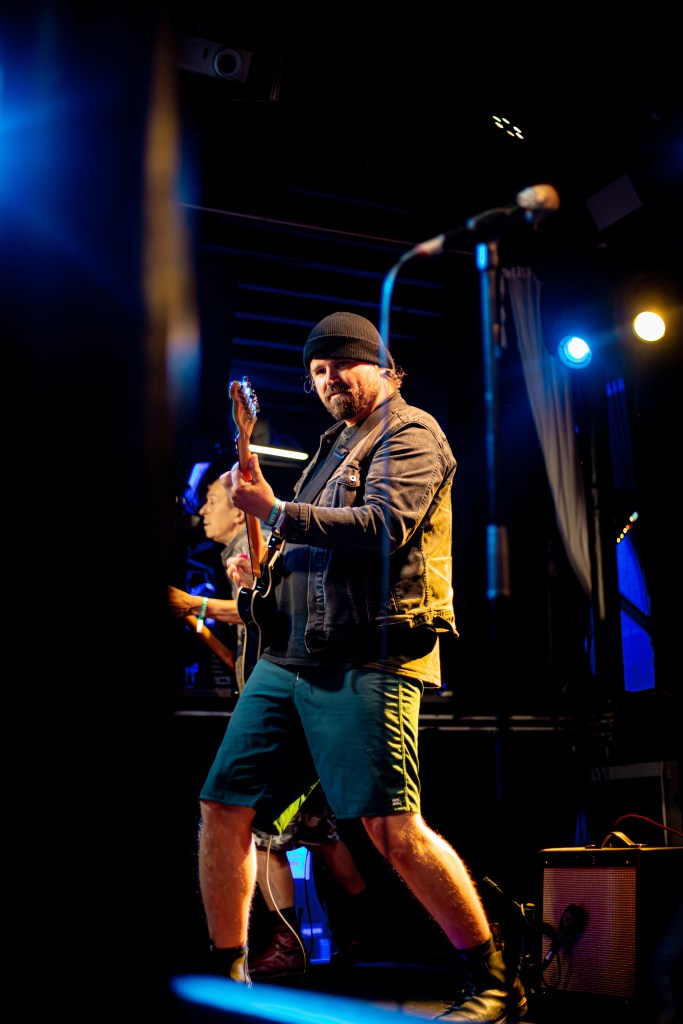
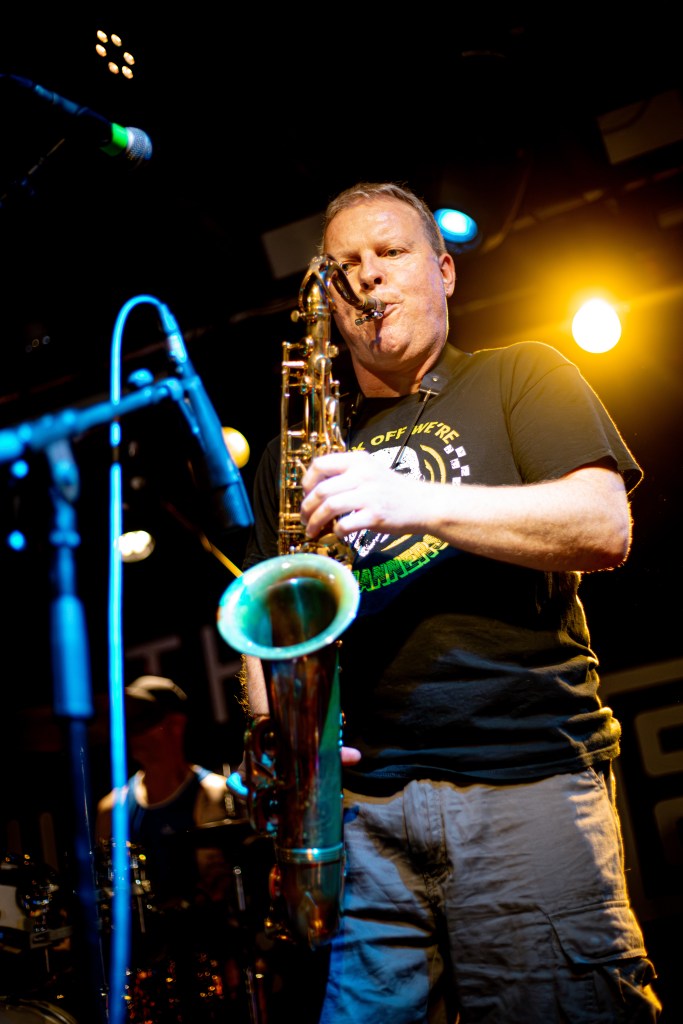
Sunday 3rd August saw the return of legendary two-tone ska outfit Bad Manners to The Fleece, celebrating an incredible 50 years of the band. For a group that began life in the mid-1970s during the rise of punk and ska revival, to still be touring with such energy and charisma is a testament to their enduring appeal.

Bad Manners formed in 1976 at Woodberry Down Comprehensive School in North London and quickly became one of the most recognisable faces of the British ska revival scene. While The Specials and Madness might have carried more of the mainstream limelight, Bad Manners always stood out thanks to their cheeky humour, raucous energy, and of course, the unforgettable frontman Buster Bloodvessel. With his bald head, oversized tongue, and flamboyant stage presence, Buster became a pop culture icon during the 1980s.

The band gained widespread attention in the early ’80s with a string of hits including ‘Lip Up Fatty’, ‘Special Brew’, ‘Walking in the Sunshine’, ‘My Girl Lollipop’, ‘That’ll Do Nicely’, ‘Can Can,’ and ‘Nee Nee Na Na Na Na Nu Nu’. Their appearances on TV — including being infamously banned from Top of the Pops after Buster painted his head bright red — only helped cement their status as ska’s rowdiest ambassadors.

Fast forward five decades and Bad Manners are still going strong, regularly performing at festivals and venues up and down the country. One such venue they hold particularly dear is The Fleece in Bristol. Buster proudly announced during the set that this was their most-played venue — and that they had no intention of ever stopping.

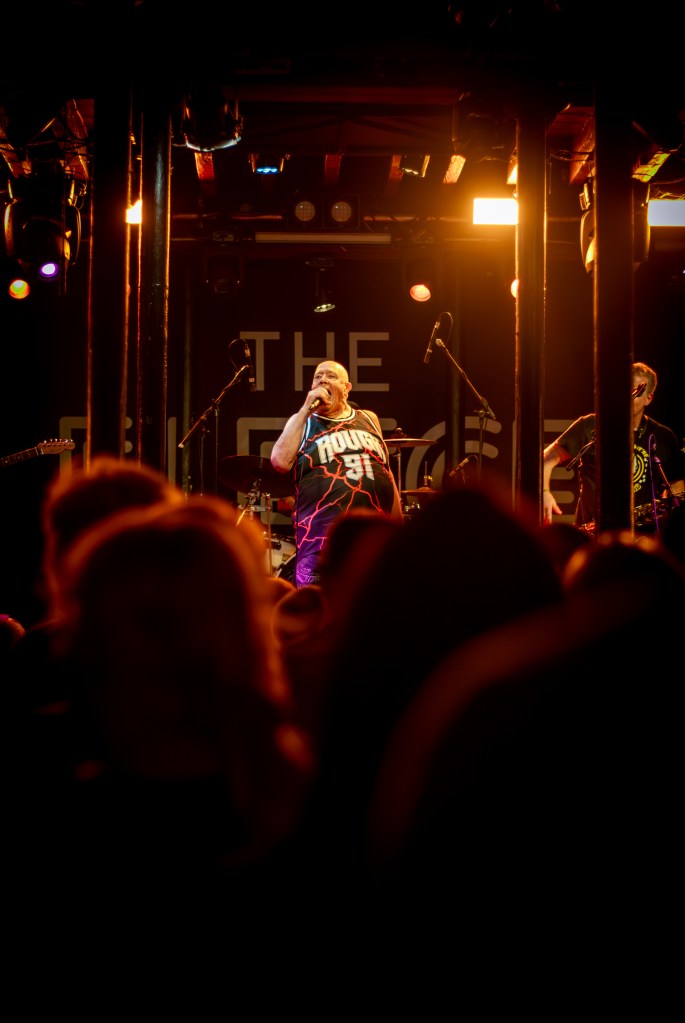
From the moment Buster hobbled on stage with a damaged knee and launched into My Girl Lollipop, the party atmosphere was instant. The crowd — a joyous mix of longtime fans in Fred Perry shirts and Doc Martens — erupted into dance, skanking from the first note. Despite the injury, Buster was every bit the charismatic showman, his booming voice and tongue-waggling antics as iconic as ever.

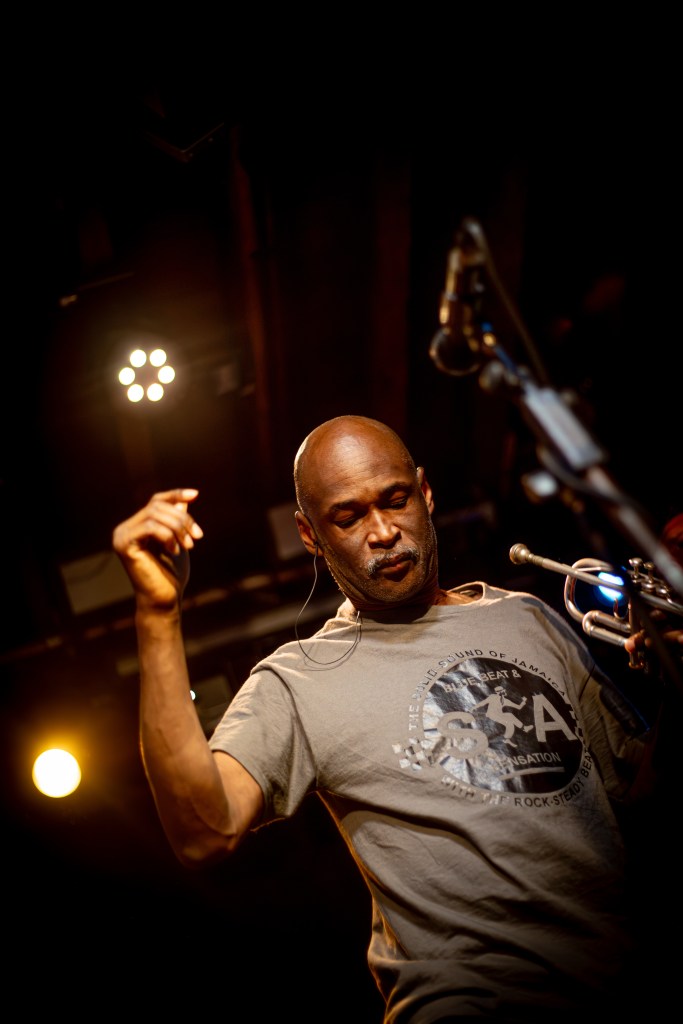
The band blasted through hit after hit in a tight, energetic set. The brass section was particularly impressive — the musicians clearly still relishing every solo and syncopated breakdown. Between songs, Buster offered cheeky anecdotes and banter with the crowd, mixing nostalgia with the unfiltered humour fans have come to love.

A standout moment came when Buster momentarily left the stage, only for the crowd to erupt in a classic chant of “YOU FAT BASTARD!” — the affectionate rallying cry that’s been synonymous with the band for decades. Naturally, Buster returned to rapturous applause and launched into ‘Lip Up Fatty’, arguably their most iconic track. At that point, it was impossible not to join the crowd in dancing. Even the more reluctant audience members were swept up in the infectious energy.

Just when you thought the night couldn’t get any more surreal, they closed the set with their infamous ska-reggae rendition of ‘The Can-Can’ — a whacky, crowd-pleasing finale that had everyone kicking and clapping along in full panto spirit. It was the perfect way to end a night that felt like a true celebration, not just of one band, but of the joyful chaos of ska itself.

There was a real sense of community in the room — a shared love not just for the music, but for everything Bad Manners represent: irreverence, unity, humour, and good old-fashioned fun. There’s something quite special about seeing a band who don’t take themselves too seriously but still deliver a tight, professional and engaging show night after night.

With more dates still to come on this anniversary tour, including their much-anticipated annual Christmas show at The Fleece on 26th December, now’s the time to see Bad Manners in their natural habitat: in a sweaty, bouncing venue packed with fans ready to skank the night away. I’ll definitely be there, and I recommend grabbing a ticket while you can — there’s nothing else quite like it.

Words and photos: David Jeffrey-Hughes

Justin Bieber SWAG review: the semi-cool sound of confidently watered-down pop-RnB

Rating: 3 out of 5.

I’m not sure what surprises me more: the sudden release of SWAG itself, or the fact that the album led JB to a career-defining record (95.8 million Spotify streams in a single day; a new personal best). Whatever the case, it’s clear that the pop star is still standing on business, making waves and shattering expectations – and this project may just be his most cohesive in a long time. But the bar was incredibly low with Changes and Justice anyway, and while it’s clear Bieber is passionate about making something adhesive, passion doesn’t always equate to quality.

At its best, this album is clear in its sound, mission and remains confident throughout; at its worst, it’s just diluted SZA with some seriously insipid lyrics. It opens strongly with the sparkly, anthemic ‘ALL I CAN TAKE’ and ‘DAISIES’, the latter featuring slick vocals gliding gorgeously over a punchy bass line. ‘DAISIES’ is the clear standout on this album,, even if it’s a little too reminiscent of Harry Style’s ‘Daylight’, it’s got an upbeat, smiling hook with vocals and lyrics that are genuinely sweet.

The problem is that the rest of these songs start to drown each other out

The album continues its hot streak with ‘YUKON’, a plucky guitar track that sounds like a track off an older Dominic Fike project – it’s layered playfully with some pitched-up vocals, and remains a sharp and fresh sound for JB (even with laughable lyrics like “I pull up like Jimmy Neutron”).

But the album isn’t all as clean – there are these redundant interludes (recordings of JB’s therapy sessions with comedian and actor Druski) that do break up a somewhat lengthy and slightly repetitive project overall. The problem is that the rest of these songs start to drown each other out, and these ‘natural’ interludes (i.e, a humorous voice note at the start, an unexpected recording of a friend dropping some wise words of wisdom) are now often overused across the board. And the type of advice that Druski drops isn’t exactly poignant – he’s just telling Justin to smoke more, or be more Black (whatever that means), and it’s hard to tell if this is meant to be ironic or not (see ‘THERAPY SESSION’ and  ‘STANDING ON BUSINESS’).

The worst offenders, and best examples of JB’s uncertain irony and overall uninspired musical creativity are the tracks ‘SWEET SPOT’ and ‘DADZ LOVE’. While the glammed, slightly euphoric beat and chorus from Justin is strong in the former, ‘SWEET SPOT’ features an awful verse by Sexxy Red. It’s unoriginal, lazy, and has the flow and sound of a child reading a poem out loud for the first time – that is, if you’re lucky enough to ignore the obscene lyrics, like “I’m a changed woman, used to be a thot-thot / That’s my boyfriend, I love him a lot (I love you, bae)”.

And while there are some gems that make you feel good, it just isn’t enough

And nothing amplifies the innate, unconditional and newfound love Justin feels for his first-born daughter like a song called ‘DADZ LOVE’ where he sings “It is dad love, it is dad love / That’s love, dad’s love” again and again… and again… while Lil B moans “Yeah!” and “Oh!”, ad-libbing the same banal lyrics JB had just sung moments before. Glad you can’t miss it.

And while the rest of the tracks do tend to blend into one another, WALKING AWAY’ is a refreshing tune in the middle of the album that is both easy to sing along to, and gorgeously driven by JB’s layered vocal harmonies. Sure, ‘DEVOTION’, ‘BUTTERFLIES’, and ‘ZUMA HOUSE’ are pretty and intimate enough to be worth mentioning, but they still lack the direction and substance that’s so evident in the first few tracks.

Overall, this is the type of album you put on in the car, sing along to the first few tracks before losing interest halfway through, and then move onto something else that will really satisfy (again, likely a SZA or Frank Ocean project instead). It’s just too washed down and diluted, and you can feel JB’s passion dwindling halfway through. And while there are some gems that make you feel good – it just isn’t enough. For an album called SWAG, you’d expect something a little cooler than this.

Recommended listening: ‘WALKING AWAY’

Words: Christopher Tang
Yungblud live review: 1300 sweltering fans gather for a stadium-worthy artist in an intimate setting

Rating: 5 out of 5.

The Prospect Building, Bristol, 13th July 2025

The day after Bristol got together to celebrate Pride, over 1300 people still got up in the heat to congregate at the Prospect Building for the much-anticipated Yungblud intimate show.

The queue of fans soon packs itself into the swelteringly hot venue, patiently waiting for the show to start. At 8 PM on the dot, Doncaster-based Dominic Harrison, aka Yungblud, and his band, all dressed in their signature smart black outfits, step onto the stage alongside deafening fans’ cheers. Even though the temperature in the venue had now reached over 36 degrees, Harrison steps onto the stage with a cheeky grin and immediately opens with the powerful ‘Hello, Heaven, Hello’. 

The whole band is focused, the sound in the venue is incredible, and Harrison seems to be singing with the power and intensity of someone performing their final show before retiring. His incredible stage presence, energy and vocals leave fans in a trance within seconds. The band takes us through the whopping 9 minutes of cinematic music with ease and precision, captivating everyone as if it were a 2-minute jingle.

After a long, powerful cheer from the crowd, Harrison takes a quick minute to express his excitement over being in Bristol. Knowing that he had to cancel the two previous shows of the tour because of medical issues, you can’t help but smile at his genuine and palpable passion for being on stage in front of his adoring fans. The band then go into their heartfelt rendition of ‘Idols, Pt 1’, offering the crowd a moment of vulnerability that perfectly balances the loud-and-proud power ballad just gone. Harrison plays acoustic guitar and trades the jittery dancing for a moment of stillness and reflection, which further allows the crowd to connect with him, as if he’s talking to them directly. This connection is deeply felt by the fans, with over half of the front row crying by the start of the song. At the end of the song, Harrison takes a moment to thank the fans for being there with him, reminding them that this is a space where they belong, that he is here for them, and that they are the reason he can pursue his dream. Considering how famous Harrison is by now, this statement could easily feel stale and rehearsed, but it’s not the case. It feels poignant, heartfelt, and honest. Everyone in the crowd seems connected in that moment, and Harrison smiles, contemplating the legacy he has built and what the four years of hard work leading up to the album’s release have amounted to. 

After the emotional thank yous, the band swiftly remind the audience what they came here for, by starting their swagger-injected rock anthem, ‘Lovesick Lullaby’. The band and Harrison sound remarkably close to the record, which is a testament to how well-written and intentional this entire album is. It’s real music, played by real people, for real people, and you can really feel it in the room.

The crowd is jumping, seemingly forgetting about the heat for a few minutes. Harrison is running across the stage, shaking his microphone around, playfully interacting with the crowd and singing with them with ease and glee. The song finishes seemingly as quickly as it started. After another poignant speech dedicated to his fans, the band take a break from their powerful rock-and-roll energy to make space for the next song, the sorrowful ‘Zombie’. Harrison’s vocal performance during this song is mindblowing. The sheer power and theatrical delivery he displays make you question how it’s even possible that he had to cancel his two previous shows to rest his voice. Perhaps the most impactful moment of the entire show happens during the second chorus of the song, where Harrison points his microphone towards the audience, letting the fans carry the song for him. Every single mouth in the audience shouts the sorrowful chorus in unison, making the 1300 capacity venue sound like a stadium. After an emotional cheer from the crowd, and another few minutes taken to thank the fans from the bottom of his heart, Harrison brings the energy in the room back up with the passionate and raw ‘Fire’.

Everybody is quickly woken up from the mournful previous song, thrust into the powerful ’70s energy of ‘Fire’. The band, although they were all sitting, sounded tight and driven, giving Harrison the space to deliver the best vocal performance of the show so far. His powerful stance, high-pitched soaring screams, and sexy strut are reminiscent of his many rock-and-roll predecessors, with a modern and somewhat emo twist. Although it may feel slightly unoriginal, his performance is so full of confidence and genuineness that you cannot help but smile, going on the song’s journey with him.

Things are then once again slowed down, with the start of another familiar ballad, ‘Change’. The song feels like something you would’ve heard your parents play on the radio in the ’80s. It’s dramatic and loud, but with a soft and vulnerable edge. The audience is hanging on to every word, singing proudly, with each person putting their own meaning behind the lyrics, creating a powerful shared moment. With each song that goes by, Harrison’s vocals seem to get more dramatic and powerful, leaving the audience in awe after every powerful high note.

Finally, the band start their last song of the short yet jam-packed set, ‘Ghosts’. The crowd screams louder than they ever seem to have, putting the final reminder of their energy into letting their idol know that they are here for him. The song’s powerful melodies and grandiose instrumental outro have the audience in a trance for the whole 6 minutes. Harrison’s emotional vulnerability reaches its peak and is channelled through a final, roof-tearing vocal performance that leaves everyone in awe. The band hits the final chord, and Harrison thanks the crowd, letting them know that they will take a moment to go outside and meet everyone after the show finishes.

Although the show only lasts 30 minutes, with no opening act, the crowd exit the venue in absolute glee, feeling like they got to connect with their idol in a way that is rare and mostly out of reach in today’s musical landscape. Getting to see this stadium-worthy artist in such an intimate setting is an experience that the fans likely won’t forget anytime soon. 

Words and image: Louis-Rene Veillon

Lorde’s ‘Virgin’ review: confrontational and stripped to the bone – but an unsettling mixed bag remains

Rating: 3 out of 5.

Lorde wants you to know she’s different. And I don’t mean that mockingly – this much has always been clear, even before the release of her most recent project. There’s no denying Lorde’s critical presence – people are still discovering Melodrama’s synesthetic legacy to this day and reeling from her iconic duet with Charli xcx last summer (‘Girl, so confusing featuring lorde’).

So when Virgin finally dropped, marking her commercial return since Solar Power’s somewhat lighter reception in August 2021, people anticipated great things. I, for one, was happier to see a return to the darker synth pop sound that made Pure Heroine and Melodrama so ambitious and moody with the release (and tease) of Virgin’s single, ‘What Was That’. But while this remains true, and the song is catchy and safe enough to be both a pop-hit and a child of Lorde’s familiar, metallic sound, I can’t help but be torn between Virgin’s mixed bag of stripped breaths, vulnerable confessions and damaged bones.

There are elements of these tracks that, whilst dazzling and brash, do start to feel overly complex for what it really is

Virgin is honest. This aspect of self-discovery can’t be denied. The project opens with ‘Hammer’, a spinning, confrontational tale of desire and new pavements. ‘What Was That’ continues this thread of exploration, starting with the lyrics “A place in the city […] make a meal I won’t eat, step out into the street”, and is certainly the right choice for the album’s lead single. But like every city you visit, there are elements of these tracks that, whilst dazzling and brash, do start to feel overly complex for what it really is. Cities are wonderful places to be. They’re daring and ambitious. But until they become home, they can feel strange and cold for the sake of it.

Lorde’s exploration of the self continues into ‘Shapeshifter’, another ear-scratching, rogue track that is likely to grow into one of my personal standouts. Although, the songwriting here is perhaps lacking in originality (“I’ve been the ice, I’ve been the flame” is hilariously reminiscent of Taylor Swift’s chorus in ‘The Archer’), and certain lines are borderline clichéd (and for the lack of a better word, cringe). “Tonight I just wanna fall” feels like a lyric taken right out of a 2000’s cheesy club hit, and Lorde’s delivery of the line that follows – “Mirror, mirror, on his shirt. I see a hot mess in an antique skirt” – feels like she’s trying too hard to sound cool. But apart from those two minor offences, the song itself is ethereal and loose. Despite this, the back-and-forth between the backing vocals (“Oh she’s a…”, “…shapeshifter”) is a gorgeous highlight that just comes far too late into the song but remains gorgeous all the same.

But most evolve into something pretty and familiar

The biggest fault with Virgin is exactly that: the songs start strange and almost too weird for the sake of it, but most evolve into something pretty and familiar. ‘Man Of The Year’ suffers the same fate where the last 20 seconds are a head-smashing, drum-crashing climax that is almost worth sitting through the initial hollowness of the song. Even with the album itself, the last two tracks ‘If She Could See Me Now’ and ‘David’ are among the strongest, saving the most dynamic parts for such a grand finale. They’re also both the most akin to her earlier work on Pure Heroine and Melodrama. And while it’s unfair, and redundant, to compare Virgin to previous work, her classically cathartic, encompassing and bold production across both tracks is untouched and perfect. ‘David’ wraps around your head with this smooth, repeated instrumental, begging the vulnerable questions (“Am I ever gonna love again?”,), while ‘If She Could See Me Now’ is a clashing, outlandish tune that rises to a crescendo with beautiful synths.

In terms of songwriting, ‘Current Affairs’ and ‘Favourite Daughter’ shine above the others. The youthful guitar opening in ‘Current Affairs’ opens to this beam of indie, coming-of-age honesty – “Mama, I’m so scared” – and is a smooth, pretty song that puts a gentle, slicker melody before anything else. There are also some haunting backing vocals that are comfortably, uncomfortably nostalgic. ‘Favourite Daughter’ is also anthemic, running track that mixes in some clever lyricism with these weird horror-movie-jump-scares in the production that actually cut delicately well into the overall beat.

“An album that is transparently bold, awkwardly confrontational, and honest to its bone”

Unfortunately, the same cannot be said for ‘GRWM’ and ‘Clear Blue’, which almost demand the listener’s attention. They both come across more like a conceptual performance than actual songs but do too much by doing too little, with a lack of consideration for an actual melody, hook or a genuine occasion to rise to.

Overall, Lorde’s mixed bag of an album is transparently bold, awkwardly confrontational, and honest to its bones. There are some gorgeous standouts with ‘Shapeshifter’, ‘David’, and ‘Current Affairs’ in all their overwhelming and slicker productions and lyrics, but something still feels off about certain moments in this project that come too early, too often. Funnily enough, the best parts of ‘Virgin’ tend to weigh more towards its own climaxes, with choruses and melodies taking their time to heat up. But is it worth the wait?

Recommended listening: ‘David’

Words: Christopher Tang
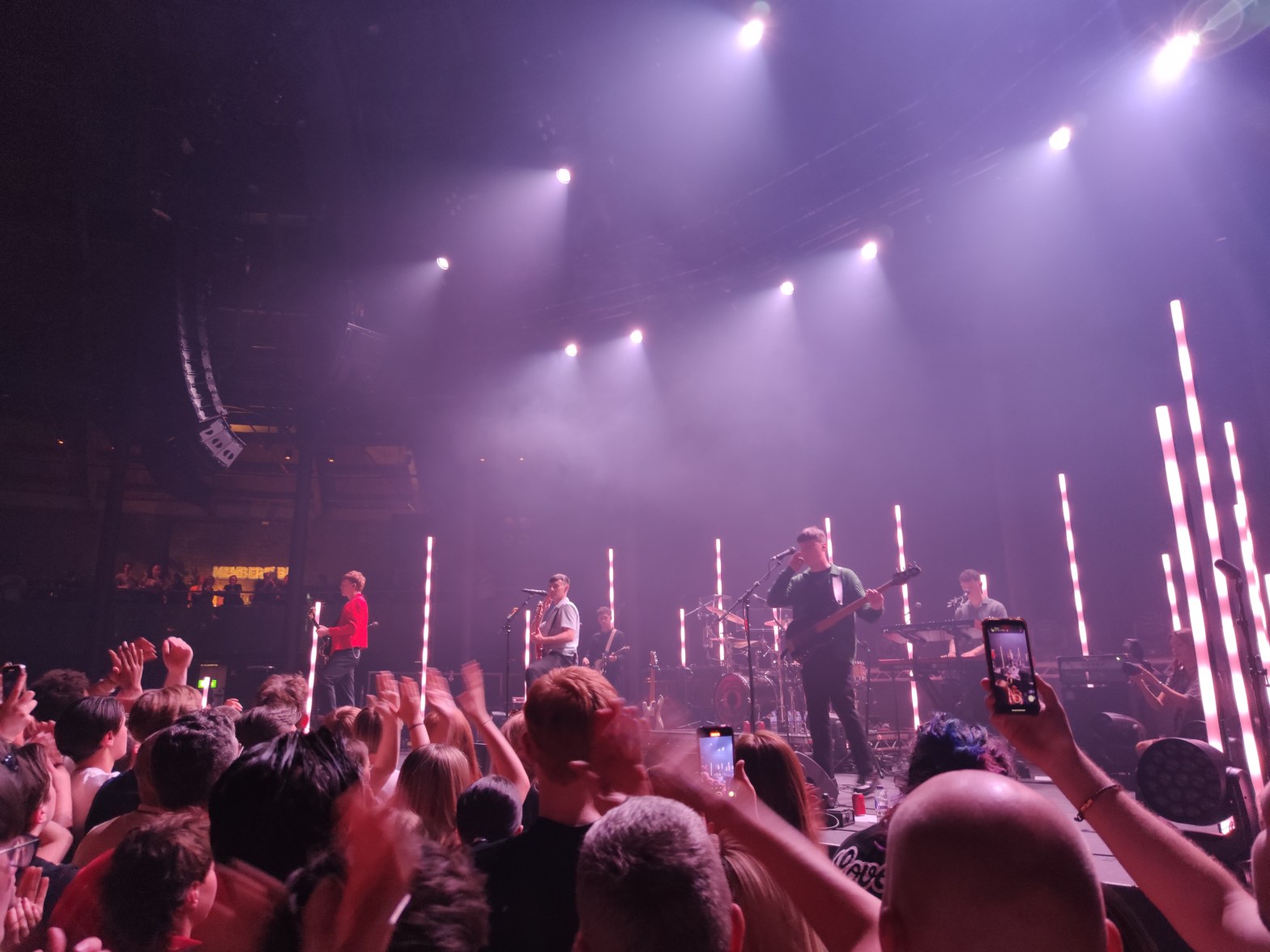
Image: Press

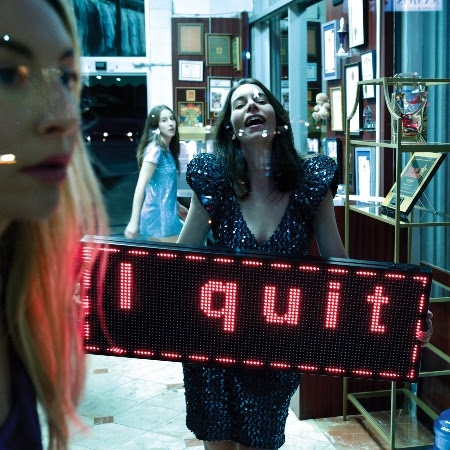
HAIM’s I quit review: brash disruptions cut through minimalist production

Rating: 3 out of 5.

No one is really under the illusion that breakups are enjoyable. You have devoted all this time and energy to a person that you deeply love and care about, only to reach a point where it doesn’t really feel enjoyable, where the two of you are growing apart fundamentally. Maybe you try to work through it, but sometimes it’s easier to throw your hands up and quit; sever any ties. That’s the approach HAIM take on their latest album, appropriately titled I quit, as they try and work their way through a crumbling long-term relationship, wondering if they should even be with this person or the entire concept of relationships “is it just some shit our parent’s did?”

The problem is that quitting something is not an experience that really inspires any swelling emotions; it’s probably why there are no great songs written about the experience of quitting smoking. Even if it’s for the best, the decision to step away can often feel like hanging in a limbo, waiting for something better to grab onto, and this space, this void, is where, unfortunately, HAIM spend most of their time on I quit. A clear example of this is the lead single ‘Relationships’, which lyrically depicts an existential view of this relationship, rumoured to be between lead singer Danielle Haim and the band’s former producer Ariel Rechtshaid, pondering if letting “an innocent mistake / turn into seventeen days” is really worth it if the connection itself seems to be faltering. The problem is that the production seems to be operating in an entirely different sphere – it’s minimalist, with most of the song being a simple drum line and the occasional synth riff. It doesn’t give Danielle Haim any room vocally to get into the emotions behind it, simply towing along with the meandering drums, unable to reach above it.

There are tracks on I quit where HAIM is able to effectively capture a moment in the ongoing cycle of this fractured relationship

This timbre is one that defines a handful of songs on the album, weighing it down. Connecting to the sensations HAIM are conveying are much harder when every few songs you’re hit with a song like ‘lucky stars’, an exploration of the earlier days of a faded relationship, built on questions of “Was it fate or coincidence / That brought you into my life?” and references to Richard Linklater’s Before Sunrise, only for it to be built on a stagnant guitar chord and sparse drums. 

However, this feeling of limbo isn’t one that permeates through every song on the album. There are tracks on I quit where HAIM is able to effectively capture a moment in the ongoing cycle of this fractured relationship. ‘Take me back’ feels like an inversion of ‘Want You Back’ off their album Something To Tell You – both songs looking back on a lost love – but ‘Take me back’ has a yearning, almost cloying nature to it as the narrator looks at all the people around them, only able to see time slip away from them, like a guy who “had a bald spot, now it’s a parking lot” and a friend Molly who “wanted to be a dancer, but had no luck” all to bring it back to the refrain of “take me back” a phrase that is repeated over and over. Where ‘Want You Back’ has a defiant shine from being able to leave behind a relationship, ‘Take me back’ pleads for its return, even if it seems like an increasingly hard thing to do. 

Although I quit isn’t a perfect album, there is a draw to it

Intermittently, I quit lashes out, it has a brashness and a self-indulgence to it that characterises some of the strongest moments on the album. The opening track ‘Gone’ samples George Michael’s ‘Freedom 90!’ for an eternally building prelude to something that just feels slightly out of reach. Whilst “I’ll do whatever I want” is sung with conviction, it never feels tenable, the cries for freedom over an ever-rising guitar riff that you yearn to reach. ‘Down to be wrong’ is a slightly more mannered reimagining of Alanis Morrissette’s ‘You Ougtha Know’ with choruses that scream about how “I bet you wish it could be easy, but it’s not this time” and crushing up pills, but even then the vindictiveness and self-destruction depicted isn’t fully realised. Not every angry break up song needs to ask “Is she perverted like me? / Would she go down on you in a theatre?” as Morrissette does, but it should be able to hold the emotion within it, punctuating the details in a way that ‘Down to be wrong’ isn’t always able to do.

Although I quit isn’t a perfect album, there is a draw to it, to trying to understand the emotions that flow throughout this relationship that’s long since run its course. Admittedly,  it’s probably a bit too long and there are moments where you feel as though you are surrounded by nothing but the repeated question of “why am I in this relationship?”, but in the end you accept that even through those moments, the relationship itself was an important thing for both of you. It is possible to reflect on it with some hindsight, to take a more holistic approach to the whole affair and even joke, “I never gave two fucks anyway?”

Words: Erin Lewis

Photos: Press

No use without permission.

The K’s live at the Roundhouse review: a defining performance for the band

Rating: 4 out of 5.

The Roundhouse, London, 13th March 2025

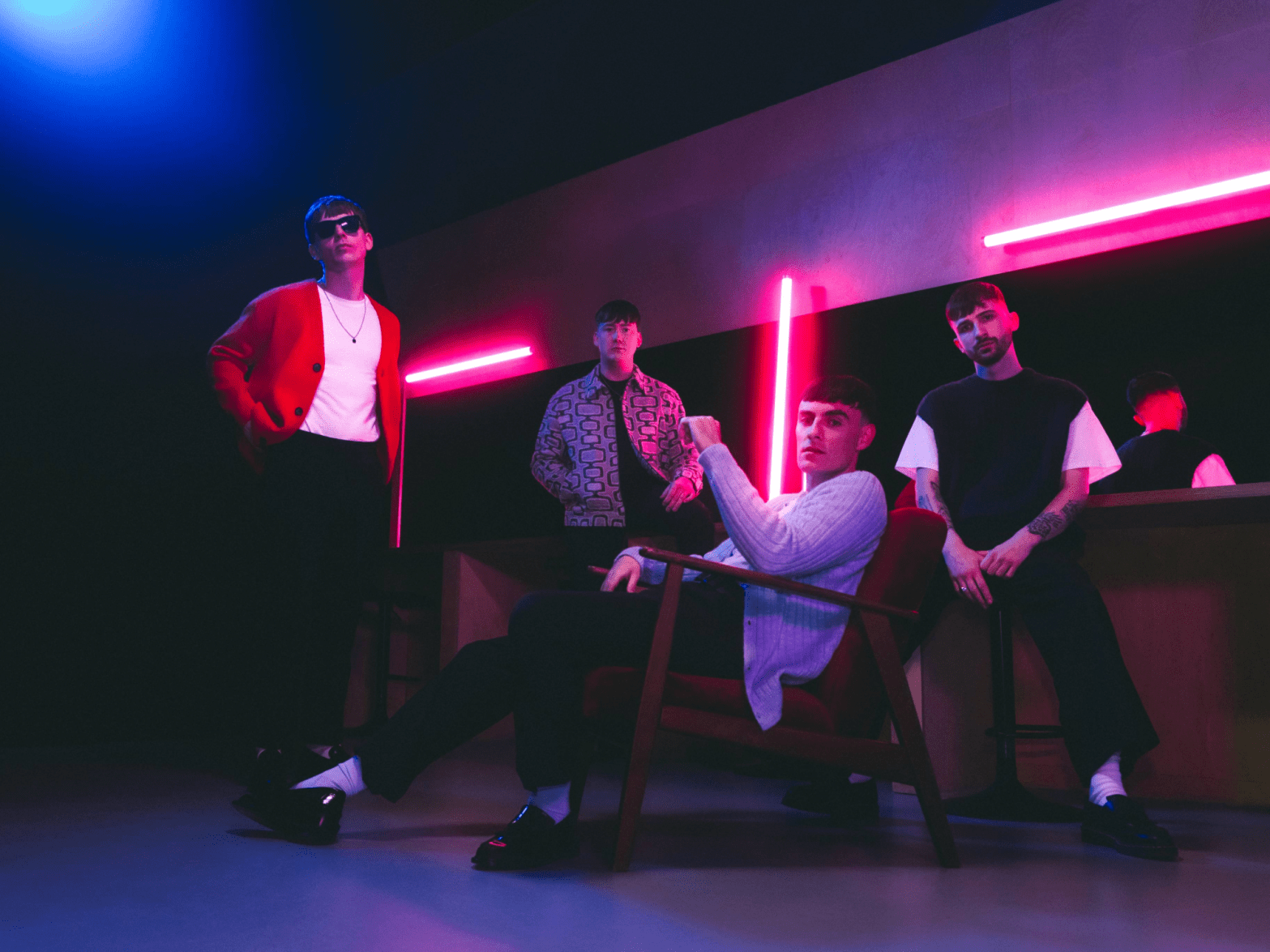
Even before The K’s take the stage, there is a distinctive buzz in the air. There always is before a K’s show, but tonight, as they gear up to play the 3000 capacity-Roundhouse, it feels more electric, more expectant – just a year ago, they were playing venues half the size. Since then, the Earlestown-based band have built up a devoted fanbase: a motley crew of people old and young, drawn together by the raw magnetism of one of the UK’s most exciting up-and-coming bands.

A euphoric roar erupts the second the band stride on stage, bathed in a wash of magenta light, as they launch into the newly released ‘Gravestone’. Despite the rapturous welcome, the crowd takes a few songs to truly come alive. ‘Icarus’, with its cinematic string arrangement, provides an early moment of reflection. While newcomers watch in awe, longtime fans glance around, stunned by the scale of the venue. It’s a quiet reminder of how far the band have come.

Between songs, they oscillate between disbelief and elation, clearly just as overwhelmed as their audience.

When ‘Chancer’ kicks in, something clicks, and chaos breaks out. Mosh pits erupt, bodies surge, and wild, ceaseless, euphoric jumping begins. ‘Heart on My Sleeve’ ramps the energy even higher, its rapid-fire tempo a shot of adrenaline. But it’s the follow-up, the heartbreakingly honest ‘Hoping Maybe’, that hushes the crowd.

From there, the band are in full control. Between songs, they oscillate between disbelief and elation, clearly just as overwhelmed as their audience. The moment feels even more poignant because many of the songs in tonight’s set (‘Glass Towns’, ‘Circles’, ‘Picture’, and so on) are the same ones they were playing years ago in sweatbox venues to a tenth of the crowd. For the same reason, ‘Throw It All Away’, a heartfelt track about the dark side of fame, is all the more touching.

When they play ‘Aurora’, they introduce it by saying, “this one’s a really old one, so you might not know it”. But much to the band’s surprise, the crowd do, and not only do they know it, but they sing it back word for word.

People climb on shoulders, arms are flailing, and shoes slip and slide on the beer-drenched floor.

The bigger venue also means a bigger production. Light-up rods surround the stage, glowing and shifting through brilliant hues of orange, blue, and pink, each colour synched to the tempo of the music.

By the time the band reach the wistful ‘Helen, Oh I’, the now-familiar chants for ‘Dacton and Wanderella’ have begun, echoing in each rare moment of silence. While it may not be the band’s favourite, it is certainly the fans’, so much so that cries of “Dacton! Dacton! Dacton!” have become staples at K’s shows. But the band don’t indulge the crowd immediately, instead charging into ‘Sarajevo’, a fan favourite in its own right, sparking another frenzy of movement. People climb on shoulders, arms are flailing, and shoes slip and slide on the beer-drenched floor.

As a parting gift, they finally deliver ‘Dacton’, to deafening cheers. A brilliantly written tragic track about a doomed young couple, it proves that this band can both put on a show for the ages, but also write a first-rate song.

It’s a fun evening, but also an emotional one. Watching The K’s step so confidently into this next chapter without forgetting the songs or the fans that got them here feels like witnessing something truly special.

Words and image: Sophie Flint Vázquez

“We’re staying true to ourselves and we’re just doing what we believe is good” – in conversation with The K’s

To anyone not paying close attention, The K’s might seem like they’ve come out of nowhere. A few years ago, the Earlestown four-piece were playing sticky pub basements to a couple of hundred people. Now, they’re playing the main stages of festivals, and last year, their debut album, I Wonder If the World Knows?, hit #3 on the Official Album Charts and had the second biggest debut album of 2024. But despite their seemingly meteoric rise, the band have slowly built up a devoted fanbase throughout the years, tirelessly promoting their music and putting on shows to get their name out there. Now, they’re getting ready for the release of their second album, Pretty on the Internet, a mere year after the release of their debut.

“It feels like it was ten years ago,” chuckles guitarist Ryan Breslin, incredulously, reflecting on the release of I Wonder If the World Knows?. “We kind of knew that album two was coming. I think you’ve got kind of, like, come back with the second album pretty quick to keep people sort of excited.”

“We’re not catering for one specific sort of generation or a sort of crowd”

Ryan Breslin, the k’s

So, last year, when the band received a phone call the day before Christmas asking them to have album two done by February, the pressure was on – not only to write and record an album in a month but also to overcome the curse of the “difficult” second album. “For the first album, we were turning them songs for, like, seven years, so we knew which people liked and what the crowds’ reactions were. So we kind of got feedback and changed bits and sort of ‘hand-selected’ the album,” Ryan explains. But the process of writing Pretty on the Internet was completely different. “With this one, it was kind of: you’ve got a couple of months, you’re touring, and now here’s your second album, pull it together.”

Now, soon to be armed with a second album, the band are gearing up to play these songs live up and down the country, including headline shows at London’s 3000-capacity Roundhouse and O2 Academies in Leeds, Birmingham, and Bristol – venues double the size of those they were playing this time last year. “We honest to God can’t wait,” Ryan beams. “We always think that people are coming from away; people are coming out on nights and leaving their family at home or whatever, spending their own money on it, coming to watch our gigs. So we always, like, want them to walk away feeling that they’ve got something worthwhile [out of it] and everyone’s had the best time they can.”

“We learn so much stagecraft doing little intimate gigs, how to bounce off each other”

And if there’s one thing The K’s know how to do (aside from pulling an album together in a month), it’s putting on a live show for the ages. In fact, it’s through this word of mouth about their live shows that The K’s are partly to thank for their recent rise to fame. “I think our strong suit is playing live, and I think the songs back it up,” Ryan reflects, with a chuckle, before adding, “My grandma still comes to shows. We’re not catering for one specific sort of generation or a sort of crowd. We’re staying true to ourselves and just doing what we believe is good, and people seem to like it!”

But as incredible as The K’s are live, they wouldn’t have made it without the independent grassroots venues that gave them a platform to hone their live shows before breaking into the mainstream. Now, many of these venues are in danger of closing, and some have already closed. Rising bills and high rent, amongst other factors, are to blame. In the last 20 years, 35% of grassroots venues have shut down, and in 2023 alone, 125 venues abandoned live music, and half of these shut entirely. In fact, the first two venues The K’s played in Manchester have now closed, as has Nambucca, the venue where they played one of their first London shows. “If it weren’t for them, we wouldn’t have done our first gig. We wouldn’t be playing The Roundhouse now,” Ryan acknowledges.

“I think it builds your character as an individual and as a musician, and you get your stagecraft,” Ryan reflects. “We learn so much stagecraft doing little intimate gigs, how to bounce off each other. Things go wrong: your amp will blow up, but you improvise, and I think it just sort of preps you for the bigger stages and doing the business on them.”

And if all goes to plan, these bigger stages are only the beginning for The K’s. But no matter what kind of success the boys achieve, Ryan is determined to stay the same as he’s always been. “I think my mum and dad would still beat the shit out of me if I said I’d made it,” he grins. “We had a working-class area and council estate sort of childhood. I don’t see how I could change who I am, and I think the lads are exactly the same because it’s just who we are. And I think that’s why we have such a close connection with the crowd because we don’t look at it as if we’re a band on stage.” At the end of their shows, The K’s are known for taking pictures with fans, signing autographs, and perhaps even going for a drink or two with them.

However, the bigger they’ve become, the more they’ve had to change to fulfil the role of professional musicians and not just four friends in a band. Music and shows aside, this also sometimes means going for a walk or run or eating healthier in between shows. “We’re kind of looking after ourselves and just being cautious,” Ryan notes before continuing, “I don’t want to sound a bit cringy, but I think the fact we’re together really helps. If someone falls down, you just kind of pick them up, and everyone sticks together as one big team.”

With Pretty on the Internet on the horizon and their biggest headline tour to date just around the corner, The K’s are showing no signs of slowing down. They’ve built something rare: a loyal fanbase, a reputation for electrifying live shows, and a refusal to compromise who they are, no matter how big their venues get. “I think that’s just sort of our mentality: to aim for the top and see what happens. So that’s where we’re going,” Ryan says with a grin. And if the past year is anything to go by, the world won’t just know The K’s, but they’ll be showing up to their shows and singing every word back to them.

Pretty on the Internet is out June 27.

The K’s ‘Pretty On The Internet’ Tour

15th April – Limelight 2, Belfast

16th April – Whelan’s, Dublin

18th April – Great Hall, Cardiff

25th April – Octagon Centre, Sheffield

26th April – Asylum, Hull University Union, Hull

8th May – Rock City, Nottingham 

9th May – O2 Academy, Birmingham

10th May – O2 Academy, Leeds

13th May – Roundhouse, London

17th May – O2 Academy, Bristol

22nd May – O2 City Hall, Newcastle