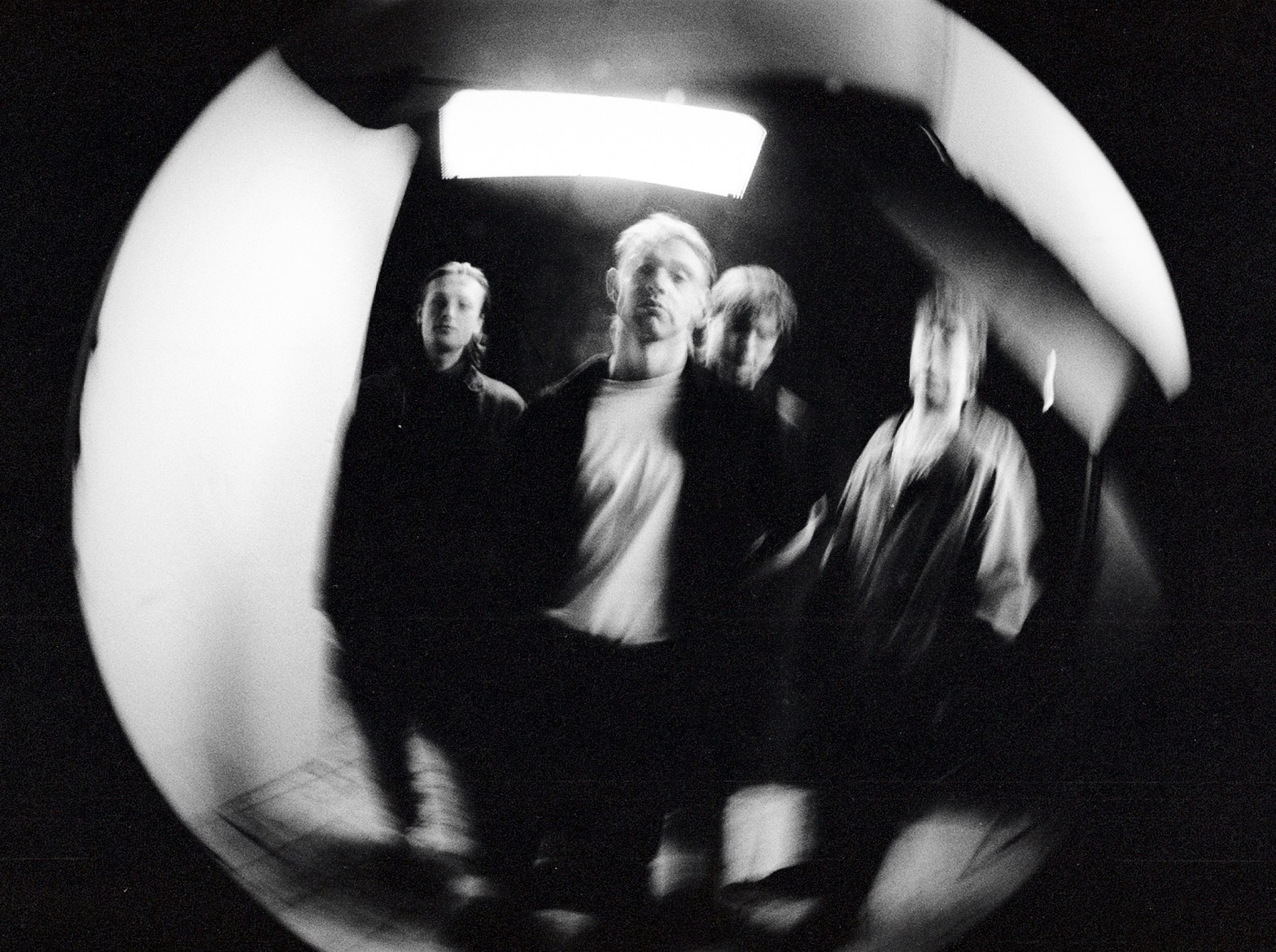
For some, Wunderhorse is a household name. For others, the response will be, “Who?”. As of right now, bubbling just beneath the surface of the mainstream contemporary rock scene, a band called Wunderhorse has been slowly rising, waiting for the moment to break through into their well-deserved mainstream fame. And after the release of their second record, Midas, this universal recognition may not be too far away.
Born after the explosive, flash-in-the-pan punk band Dead Pretties decided to call it a day back in 2017, lead singer and guitarist Jacob Slater took some time off before eventually re-emerging under the name Wunderhorse in 2021 and releasing his debut album, Cub, in 2022, which was received with critical acclaim. Combining infectious melodies, groovy hooks, and a dash of leftover grit from his time with Dead Pretties, Cub was an exciting – if a tad overly safe – new beginning for Slater, putting his reckless punk days to rest in favour of making radio-friendly rock for the masses. Slater was then joined by guitarist Harry Fowler, bassist Peter Woodin, and drummer Jamie Staples, who began as touring musicians for Slater but eventually became part of the band.
“We spent a lot of time together, and I think it just naturally started,” Jamie Staples says, reflecting on his time touring with Wunderhorse before their current formation. “As soon as [Cub] came out, we were able to start touring it. We kind of reimagined a lot of those songs for a live setting.” Even the band’s glossier songs, such as ‘Leader of the Pack’ and ‘Purple’, suddenly had a newfound edge.
“I mean, as of now, we’re able to keep up that energy. I don’t think any of us think about, you know, what moves we’re going to pull on stage or any of that business”
Jamie Staples, Wunderhorse
This heavier sound didn’t fully take flight until album two, though. Moving away from the standard pattern of a band’s second album being poppier than the first, Midas marked a new beginning as they traded slick riffs and polished vocals for full-on, grungy rawness and distortion.
As the band shifted their sound towards this rawer sound, they also began building a reputation for themselves through their riotous live shows, earning themselves coveted support slots for the likes of Pixies, Declan McKenna, and current band-of-the-hour Fontaines D.C. Whether it was Slater grabbing his throat during performances of ‘July’, wrapping the microphone wire around his throat, or his rasping growls in between verses, there was a growing sense that Wunderhorse were not only capable of writing a first-rate tune but were also capable of putting on an exemplary show while also remaining authentic to who they were as musicians.

“Honestly, I would say all of this is real. And you may catch us on a day when it’s not as visceral,” Staples says, reflecting on Wunderhorse’s run of shows opening for Declan McKenna. “I mean, as of now, we’re able to keep up that energy. I don’t think any of us think about, you know, what moves we’re going to pull on stage or any of that business,” Staples tells me with a chuckle. “I think that’s the opposite of what we’re trying to do.”
“We try and get ourselves in a headspace to be able to do that before a show, yeah, in order to go out and do something real. And maybe in that sense, you could say it’s contrived because we have to get into a bit of a zone for it,” he explains. “We just try our best to keep the energy up in our shows; it’s what we like doing.”
“One of the overarching themes of the album would be the human intervention of something quite natural and the destruction of it”
This sense of wanting to do something ‘real’ doesn’t just influence their live shows but also permeates their music. When making Midas, the band aimed to make an album that sounded “imperfect, very live, very raw; no frills… like your face is pressed up against the amplifiers, like you’ve been locked inside the bass drum.” Paired with lyrics describing an array of unsatisfying lives (‘Midas’, ‘Emily’, ‘Rain’, etc.), Midas paints the picture of people suffering from the effects of late-stage capitalism and the loss of the natural world.
“It’s hard to say this in a way that doesn’t sound too ‘art school’ or whatever, but one of the overarching themes of the album would be the human intervention of something quite natural and the destruction of it,” Staples ponders, choosing his words carefully. “I think people in their own worlds find any way they can to find stuff that is real and right,” he goes on to add: “Technologies are, like, this big factory sucking you out of the real world.”
This idea inspired the themes in Midas and shaped the album’s creation. The band headed to Minnesota to record in Pachyderm Studios, the same studio where Nirvana recorded In Utero in 1993.

“The way we approached this album was to more or less put our phones away for a month and to make this record fully absorbed in something. And I can definitely say, retrospectively, there was a lot to that because at any given moment, any given day, you might be creating something, or whatever you’re doing, and your phone is going to ping and take you right out of that. And you never know what you might have been onto if you’d just allowed yourself to, well, get bored almost and allow your imagination to do its thing.”
“With what we were doing, it wasn’t too difficult for us. None of us are particularly that wedded to our phones. I think we were very focussed on what we were doing. We were very appreciative of the time we’d been allotted in that great studio, so we just wanted to make the most of it.”
“I think it’s a song about someone that could have been… but just didn’t have whatever it was inside themselves to make it happen”
Jamie Staples
In a sense, the dispairing pictures Midas paints also beg the follow-up question: Is there an antidote to this reliance on technology, dissatisfaction with modern life, and feeling of disillusion that the band points out? “I don’t know if I’m qualified to answer this,” Staples chuckles. “I would hope so!”
But perhaps the first step to ‘solving’ this dissatisfaction is acknowledging it. On ‘Superman,’ the sixth song on Midas, the band tells the devastating tale of someone putting their passions aside in favour of a cushy office job but being unable to shake the feeling they have picked the wrong path.
“We’re going to do everything we can to push this record”
jamie staples
“It’s supposed to be a song everyone relates to,” Staples explains, a forlorn twinge in his voice. “I think it’s a song about someone that could have been… but just didn’t have whatever it was inside themselves to make it happen. Their dreams kind of fell by the wayside, but they still feel like they’ve got this superhero inside of them that no one is ever going to be able to see.”
Unfortunately, not everyone is lucky enough to make a living off of their passion. In fact, despite their laurels and rising star status, Wunderhorse still has to rely on part-time jobs to make ends meet. So perhaps the temporary solution to this is to have some sort of outlet to let that pent-up disappointment go, whether writing songs about it, going to a gig for collective catharsis, or something else entirely.
“The only thing I can tell you with any assurance is our tour in October, and we’re going to support Fontaines [D.C.] in Europe in November, and we know for sure we’re getting put to work next year in quite a big way. We’re going to do everything we can to push this record,” Staples says. “Alongside that, we’re starting to write the next thing,” ending the interview on a cryptic note and with a smile.
As they gear up for a packed touring schedule, Wunderhorse’s moment in the spotlight is finally within reach. With their growing reputation, commanding live performances, and outstanding second album, they’ve proven they’re more than ready for the success that awaits.
Words: Sophie Flint Vázquez
 TrueStyleMusic